
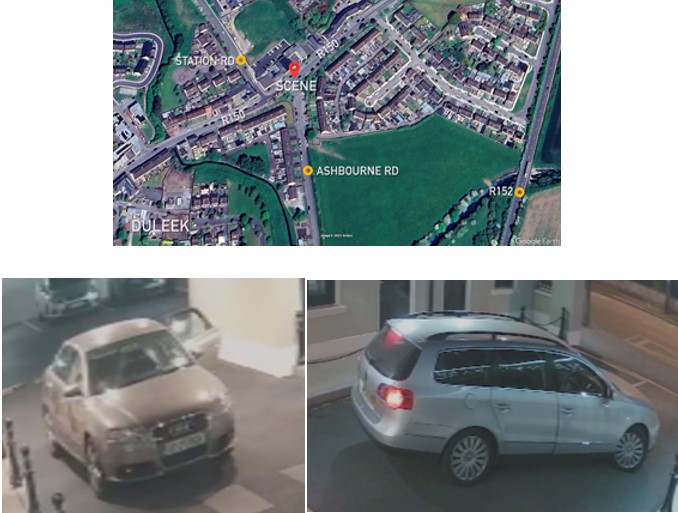
The Gardaí at Laytown are investigating a burglary of Nannys bar,Duleek, Co. Meath. At approximately 1:20am on 20th May 2025, a champagne coloured Audi A4 registration 07 D 53824 arrived at pub, carrying (4) suspects. It drove through an archway of the premises, and into the back carpark, where three males exited the car.
They searched the reception area and outside the premises before forcing their way inside. While inside, they searched the manager’s office and the lounge area. They returned to the car and then went back into the bar carrying an axe, hatchet and crow bar, and continued to search the premises. They then returned to the Audi car and left the vicinity, turning right onto the Ashbourne Road.
They returned approximately (90) minutes later shortly after 3am, when they were joined by a silver Volkswagen Passat, registration BF 59 VNB. A fifth suspect joined them and they entered the premises. They removed a cigarette machine and put it into the back of the Volkswagon Passat. The contents of a safe (cash) were also taken. They suspect’s then left the area again turning right onto the Ashbourne Road.
Descriptions of suspects:
Suspect 1 – two tone grey and navy tracksuit approximately 6ft and slim build
Suspect 2 – all dark grey tracksuit and face covered again approximately 6ft
Suspect 3 – dark with camo style hood on jacket, unique runners - driver of Audi
Suspect 4 – black North Face clothing
Suspect 5 – blue tshirt, navy/dark Gilet, black hair, glasses and aged in 20s -driver of VW Passat
Vehicle Details:
- Champagne coloured Audi A4 registration 07D53824
- Silver Volkswagon Passat registration BF59VNB
Garda Appeal:
- Did you see the Audi or VW in the days leading up to the 20/05/2025?
- The Audi was purchased the night of the 19/05/2025 in Santry and recovered in Clondalkin the following evening – Did you see any one drive it / park it?
- Did you see the VW Passat? This vehicle was recovered in the Drimnagh, Dublin 12 area on the 10th July 2025 and is registered to a male in UK but has been in Ireland for number of months, did you or anyone you know see/ purchase same?
- Where you passing through Duleek on the night of the 20/05/2025? Did you see either of the two vehicles or the suspects? with the descriptions provided, to see do you recognise them?
- Do you have any information about this incident that will assist the investigation?
- Anyone who may have come across these cars in the days following?
- Anyone who was offered the cigarette machine or its contents?
The Garda Commissioner Justin Kelly was in studio and spoke with RTE presenter Carla O’Brien on this month’s Crimecall, when he discussed a range of topics including drug crime, rural crime, violent political extremism, roads policing, sexual crimes, and the launch of Tasers and body worn cameras to Gardaí.
On the topic of concern within communities in relation drug intimidation and drug related crime, the Commissioner highlighted the importance of those effected coming forward to An Garda Síochána. By way of reassurance he highlighted the presence of drugs-related intimidation inspectors located in every division throughout the country - These are specially trained officers equipped to deal with people coming forward and have resulted in many successful prosecutions for suspects involved in drugs related intimidation.
On the question of rural crime, the Commissioner acknowledged that many people in rural communities feel isolated and have a fear of crime. He referenced a number of operations, and highlighted a key operation – “Operation Thor”. He explained how It targets residential burglaries, and in the (10) years since its launch, the residential burglary rate has reduced by 75%.
The Commissioner was pleased to announce the appointment of a Superintendent who now has the role of rural crime lead and who will be reaching out to rural communities and groups around the country to work in tandem with the organisation’s strategy for tackling rural policing – facilitating the continuation of putting a lot of resources and capabilities towards tackling each problem.
On the issue of the rise in violent political extremism in Ireland, the Commissioner stated that we're not immune to it here - similar to the UK, and in fact, across wider Europe. He then acknowledged the importance of people’s right to disagree with political positions, and to protest, and that An Garda Síochána would do everything it can to facilitate that. However, he then explained that once you cross the line into violence, you will be dealt with – if necessary by way of arrest and prosecution.
The Commissioner while speaking about the recent activity surrounding the various IPAS centers, explained the role that social media and disinformation by certain individuals have to play.
He then continued that another aspect of this is the targeting of politicians and persons in authority – which he emphasized that a really important message is that, just because you think you're online, you can get away with this, that's absolutely not the case. An Garda Síochána have identified many people suspected of involvement in these types of threats, and dealt with them with arrests, prosecutions and some very significant convictions in the last year. This is a threat that we really take seriously in An Garda Síochána and advise that there are connections to groups abroad.
Speaking about the Crowe reports findings that some Gardaí in Roads Policing were deliberating underperforming. The Commissioner indicated the report stated it was a small minority of officers and that it wasn't an orchestrated behavior.
However, he did want the viewers to know that he takes this extremely seriously, and that all the report’s recommendations have been accepted, and that efforts have been undertaken to rectify a lot of what had been identified.
Finally, he stated that the vast majority of our men and women working, in roads policing do a really good job, and commented that viewers will we seen this firsthand the dedication and passion that they have for it by those appearing on the programme.
On the force's response to victims of domestic abuse, two reports during the year, one by the Garda Inspectorate and another by Women's Aid, which found almost half of women who reported domestic abuse find the response by Garda Aid to be unhelpful. Separately then, data from the Director of Public Prosecutions showed that prosecution was directed in just a third of sexual offences in the last decade.
The Commissioner stated that the reporting of sexual crime has increased in Ireland and he certainly takes that as a marker that people feel safer to come forward and to speak to Gardaí, and he would certainly encourage people who are victims of sexual or domestic abuse to do so.
In relation to sexual crime we now have specialist Garda Divisional Protective Services units in each division throughout the country. Each comprising of men and women who are highly trained, and highly experienced. He went on to explain that he met with Women's Aid in his first couple of weeks in the organisation and spoke to the Policing Authority who were responsible for that first report. He stated that Domestic Abuse is an absolute scourge to our society and it is important that An Garda Síochána have to be there for victims.
Speaking about the Taser and Body Worn Camera rollout – the Commissioner said thatmembers of the public will now see officers with body cams and what we have found is that it’s really useful tool in the gathering of evidence and to de-escalate violent situations. One of the key areas, being around domestic abuse, allowing our officers capture the whole situation when they get there.
In relation to the Tasers, he said that we're due to launch a pilot this week, for six months. We’re going to have (128) officers issued with a Taser. Every year we have about (300) officers injured, some of them badly, and that's despite the fact that they're already issued with pepper spray and a baton. With Taser’s again, similar to Bodycam’s, all the studies show that it de-escalates situations, even the mere presence of it. But I just want to certainly reassure members of the public, this isn't a move towards arming An Garda Síochána. “This is around protecting our officers, protecting members of the public in really dynamic situations”.
Finally, the Commissioner thanked the public for all their help during the year that they have provided to An Garda Síochána. He thanked Gardaí and Garda staff for their assistance and dedicated work throughout the year, and in particular all the men and women who are going out there putting their lives literally on the line for us and the public to keep us safe. The Commissioner also mentioned the death of a member on duty earlier in the year - Garda Kevin Flatley, which he said “serves as a reminder and brings home, the dangers”. “My thoughts are with Kevin's family, at this time of year. But again, I look forward to working and leading as the 23rd Commissioner of An Garda Síochána into 2026”.
This month’s December Crimecall included an extended Roads Policing segment offering advice to road users across the Four Garda Lifesaver offences that contribute to fatal collisions on our roads. Life Saver Offences:
- Speeding
- Driving under the influence – drink / drugs
- Non wearing of seatbelts
- Using a mobile phone while driving.
The segment included contributions from the family of Cian Mooney who was killed in a collision near Piltown, Co Kilkenny, in 2022.Cian’s parents Eamon and Sylvia made the brave step of speaking about their loss in the hope that it would help saves others from experiencing a similar tragic loss. Other contributors to the extended segment included Dr. Gerry Lane a retired Emergency Department consultant who has fronted the RSA’s Road safety campaign. Advice was also given by various members of the different Garda Roads Policing units.
Review of Fatalities
While the number of fatalities on our roads since the beginning of 2025 is currently (172), be under no illusion there have been far more lives destroyed than just (172). Each one of these deaths on our roads has had an absolutely catastrophic effect on each of the families that have lost a loved one…. Fathers, mothers, sons, daughters, friends, clubmen and women. The tsunami of grief that follows after a fatal road traffic collision is far beyond what anyone can imagine.
Choices and Consequences:
After 32 years in An Garda Síochána, with (22) of these in roads policing I have come to realise that it’s a matter of choice. The vast majority of fatal collisions that I have attended all have begun with someone making a choice. A choice to speed, a choice to pick up that phone, a choice to drive while under the influence of drugs. What people don’t realise or understand is that the consequences of THEIR choice can have absolutely catastrophic consequences, sometimes for themselves and for other people.
What I would strongly encourage all of the people watching here tonight is to understand that the choices that you make…. you make…. can and sometimes does have fatal consequences. I have seen it time and time again over the years at the scene of these fatal or serious injury collisions. Decent people, hardworking people who in their eyes would never harm another person are left with blood on their hands.
Road safety is not pretty, road safety is not nice and as we head towards what should be the happiest time of the year there are (172) families that will spend their first Christmas without a son, a daughter, a parent, a friend. There are (174) families who are facing into their second Christmas without a loved one, and so on. Some decisions you make last a lifetime.
One of the other key elements to be being safe while in a vehicle is to make sure and wear a safety belt. Actually it’s not just wearing your safety belt, but to wear it properly. A handy guideline is to touch your left shoulder with you right hand. This is the same line that your safety belt should be across your chest. It can be very dangerous to wear your safety belt under your arm. It can also be highly dangerous to be sitting on your safety belt while it is clicked into place. There are pre-tensioners on all modern car safety belt systems and if this is triggered, which can happen even in slow speed collisions, then it can have devastating consequences. An Garda Síochána would advise all people who are travelling in vehicles to always wear your safety belt. The message is quite simple – Safety Belts Save Lives
Operation Open City /Christmas & New Year Campaign
On December 1st An Garda Síochána’s Christmas & New year campaign began. Operation ‘Open City’ is designed to facilitate the movement of public transport and minimise traffic disruption to the general public, through high visibility and enforcement activity’.
In conjunction with ‘Open City’, the Christmas & New Year Enforcement Operation will target lifesaver and intoxicated driving offences over the holiday period. Both operations will complement each other with the aim of preventing fatal and serious injury collisions on our roads as well as prevention and detection of crime and public order incidents.
During this period, members of An Garda Síochána’s Roads Policing Units, supported by their colleagues from regular and community policing units across the country will be mounting checkpoints and conducting high visibility and covert patrols, focusing on careless, distracted and intoxicated driving among other offences.
So far this year, (2898) drivers have been arrested for drug driving & (4638) have been arrested for drink driving. This behaviour continues to be a problem on our roads and An Garda Síochána will be mounting extra Mandatory Intoxicant Testing Checkpoints (MIT’s) during this busy festive season to deter anyone thinking of driving while they have drink or drugs in their system. MIT checkpoints are specifically to target intoxicated drivers. They are authorised by a Garda Inspector and gives Gardaí the power to stop and test any driver for the presence of drink or drugs in their system regardless of whether they suspect them or not.
Last year An Garda Síochána conducted (46,097) MIT checkpoints and this year will see the same level of enforcement. So far (7536) people have been arrested for driving while intoxicated, so the message is simple. We are out there, so if you plan to drink or take drugs that will impair your driving - don’t risk it.
Advice:
I would ask people going out socialising this Christmas to plan ahead. Leave the car at home. Over the years we have seen where people drive to their destination, with the intention of leaving the car behind and getting a taxi or public transport home. They come out and it’s raining, there are no taxis and suddenly they are behind the wheel driving home. Leave the car at home - it removes the temptation to drive home.
A lot of people will visit relatives over the Christmas period and may have a drink. I would like to remind people that house measures can often be larger than pub or restaurant measures and it’s something that often catches people out.
People should also be mindful of driving the next morning after a night out. Make sure enough time has elapsed to allow the alcohol to pass through your system.
It should also be noted that Garda MIT checkpoints are not just conducted at night. They can take place at any time of the day, morning, noon or night. With that in mind, we would like all drivers to heed the following...
- Never, ever Drink/Drug drive
- Book a taxi or use public transport
- Nominate a Designated Driver
- Make sure you are Alcohol free the next morning
We would also like to appeal to passengers of drivers that may be intoxicated to call them out. Do not get into a car if you suspect the driver to be intoxicated. Take the keys from them if you can. If this is not possible, call 999 or 112 immediately.
We will be on the roads on a 24/7 basis over the Christmas period, focusing on all lifesaver offences, but particularly driving while intoxicated. We will intercept drink and drug drivers. If convicted, you will lose your licence. Please don’t be one of them.
Distracted Driving – It’s Never Acceptable
These days there are more and more things that distract us from our daily tasks. Unfortunately, this goes for the task of driving too. With the hustle & bustle of the fast paced modern life, we tend to forget how dangerous driving a vehicle, actually is. Every time we get behind the wheel of a car, we have the potential to kill if we do not treat it with respect and realise that you must give driving your full attention at all times.
Modern vehicles are vastly different from the cars of (20) years ago. Infotainment systems and wireless connections to our phones make our cars mobile entertainment centres. All of this tech can be distracting to a driver, not to mention the dreaded mobile phone. Holding a mobile phone while driving is an offence, which can result in a fine of €120 and three penalty points on your licence, and that is the best case scenario. If you use your mobile phone while driving, you are four times more likely to be involved in a collision. It’s just not worth it.
An Garda Síochána are out detecting offences such as holding a mobile phone 24/7, 365. But it’s not just holding a mobile phone while driving that will result in a fine and penalty points. Any form of distracted driving will result in a fine and points. Driving without Reasonable Consideration for other Road Users is an offence and if you are observed by a Garda not giving the road your full attention, you can receive an €80 fine and three penalty points.
This year to date (6368) people have been issued with a fixed penalty notice for Driving without Reasonable Consideration. It could be anything from tailgating, inappropriate lane changes, using your cars infotainment system excessively or inappropriately, turning around to deal with a minor in the rear of the car. The list is vast.
An Garda Síochána will continue to police the Nation’s roads in a bid to change driver behaviour and make the roads a safer place for everyone. Last year saw the introduction of some new initiatives which included:
- An unmarked truck to target drivers of HGV’s and other vehicles for distracted driving.
- New high powered unmarked vehicles such as the VW Golf GTI
- Unmarked motorcycles
This year also saw an increase in roads policing members across the Garda regions outside Dublin and in 2026, more members will be recruited to the DMR Roads Policing Division.
Fatigue
It is estimated that driver fatigue is a contributory factor in as many as one in five fatal collisions, in Ireland every year. A recent survey has shown that (28%) of motorists in Ireland say they have fallen asleep or nodded off while driving[i]. These are stark statistics, and as a member of An Garda Síochána for the past 20 years, I am all too familiar with driving home in the early hours after working a night shift. It is difficult to pull over and stop, you just want to get home, but by not stopping, you risk not getting home at all.
Advice for tired drivers:
- Stop and park in a safe place such as a petrol station
- Sip/Drink a caffeine drink
- Sleep - Take a 15-minute nap. (It takes roughly 12-20 minutes for the caffeine to take effect)
- Before you set off again, get some fresh air and stretch your legs.
The above steps should give you another hour or so, but, if you are suffering from a chronic lack of sleep. The only cure is sleep.
Our Message
The message is simple, it hasn’t changed, but people still don’t seem to heed it. Concentrate on the task of driving. It is the most dangerous thing you will do on a weekly basis. Do not let anything distract you from observing in front of you and around you. Be respectful of other road users, especially vulnerable road users. Do not engage in dangerous behaviours or road rage - It’s just not worth it. Our dedicated members of Roads Policing teams across the country are out and about and it is becoming increasingly likely that if you engage in this type of behaviour, you will be caught and may face prosecution. Our deployment methods and technology is now second to none, so please act responsibly. We all have a duty to make our roads a safer place to be.
Speeding
Garda Lyn Connaughton a forensic collision investigator was in studio and offered an insight into her work and the factors that contribute to fatal collisions. Sadly, Lyn explained that she sees first-hand cases like Cian’s.All too often stories like the Mooney family are a stark reminder of how deadly speeding is and how quickly lives can be changed in an instant. All it takes is for a car to hit a bump or round a bend too fast and it can spin out of control. This is very real and we see it all the time.
Garda Connaughton explained what she has learned over the years about the role speed plays in road fatalities. Speeding is a significant factor in the cause of serious and fatal collisions. Driving at excess or inappropriate speed reduces driver reaction time, increases the severity of impacts, increases stopping distances and gives the driver less control of the vehicle. A vehicle does not have to be over the speed limit to ‘be speeding’. A driver must drive to the conditions that are presented like the area they are driving in, weather, road and traffic conditions, condition of the vehicle and tyres and driver experience. Serious and fatal collisions can occur at speeds as low as 50km/h, it does not have to include ‘high speed’.
Speed detections:
- There have been approximately 150,000 speed detections year-to-date – (149960)
- 2024 - 137858
- 2023 - 154534
So far this year almost 150 thousand drivers have been given a fixed charge notice for speeding. That compares with almost 138 thousand during 2024 and almost 155 thousand in 2023. These figures are a good indication of the extent of the problem and the need for some road users to change their behaviour. The message we are trying to get across is SLOW DOWN and be aware of your surroundings and other vulnerable road users.
Factors that contribute to fatal collisions:
We know too that speed is very often combined with other factors listed below which everyone should be aware of:
- Speed is a factor in fatal collision, significantly reducing reaction time and increasing impact severity, especially in rural areas where young male drivers (16-35)?? are highly vulnerable in single-vehicle collisions.
- Fatigue
- Intoxicated impaired driving - alcohol/drugs
- Distracted driving
- Non wearing seatbelts
- Inexperience, and poor road/weather conditions, with human error underlying most incidents, leading to loss of control and fatalities.
Effect of speed when controlling a car:
Speed effects a car in several ways from longer braking distances, the force of an impact is greater, there’s a reduced reaction time available to the driver and the car also becomes harder to control.
For example, a car travelling at 50km/h on a dry road with good tyres would take a minimum of 12 metres to stop under emergency braking. 12 metres would be similar to the length of a HGV. That distance is not factoring in how long it took the driver to react to a hazard. So if a driver takes one second to react the vehicle as already travelled 13.8 metres before the brakes are activated, so that gives a stopping distance of 25 metres in ideal conditions. If the vehicle is travelling at 100km/h the stopping distance is quadrupled.
- 50km/h = 12m stopping distance
- 100km/h = x 4 longer
Role of speed limits:
Our advice is always to slow down, stay within the limit and drive according to the conditions. The speed limit is a limit it’s not a target. For example, a road outside a school might have a limit of 50kmph but that doesn’t mean you have to drive at that speed. The speed might be appropriate at 2am in the morning but it is certainly not suitable for 2pm in the afternoon when the likelihood of a child running out onto the road is high. You have to drive within the limits of the presenting conditions, from the weather, the area, the condition of the car and tyres, to the experience of the driver. You might just save your own life or your passengers. The driver can decide the speed but the physics will decide the outcome.
Sergeant Tony Miniter ended the segment with a positive message - I don’t want to end on a sad note because this is also the season of hope. There are so many people out there who do things right, who make the right decision while using our roads, who speak up if they are in a car with someone who is being reckless, who make the right decision day in and day out. I want to say to them, well done and keep going. To all of the viewers who over the coming days, weeks, months who will be faced with a thousand simple choices, do I pick up the phone, will I take a taxi or walk home after a few pints, will I stick to the speed limit, will I choose to drive safe and pay full attention to the road ahead. I strongly encourage them to make the right decision, and the right choice.
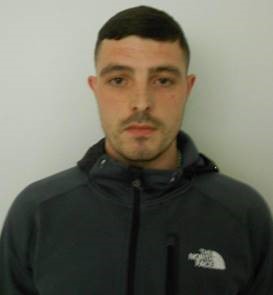
The Gardaí in Balbriggan are seeking the public’s assistance in locating 30-year-old Keith Hammond.
Description:
- Approximately 6ft 1
- Black hair
- Thin build
- Brown eyes
Last Known Address:
- Bath Road, Balbriggan, Co. Dublin
- Known to frequent Donabate
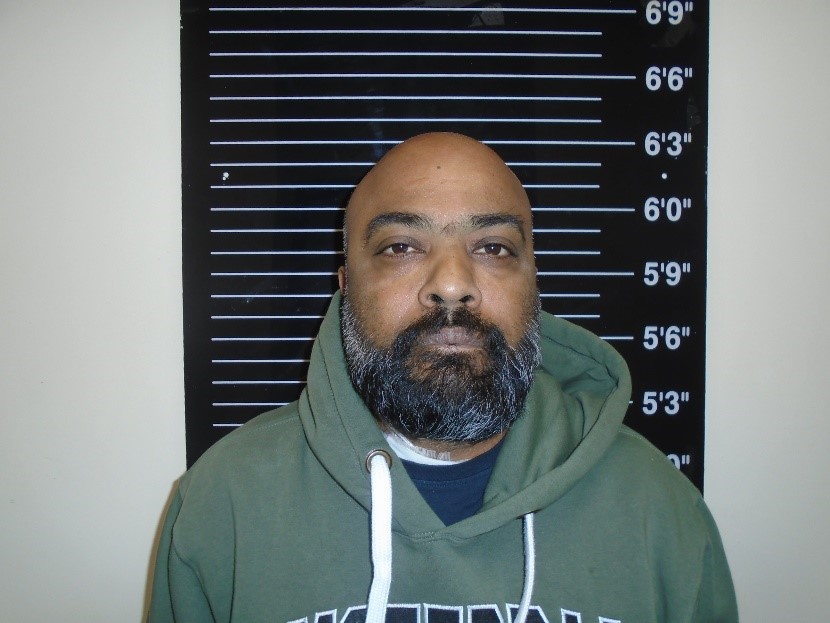
The Gardaí in Cabinteely are seeking the public’s assistance in locating 45-year-old Richard Ramlochan.
Description:
- 6ft 2 in height
- Black hair
- May or may not be clean shaven now
- Stocky build
- Tattoos on both arms
Last Known Address:
- Castle Lane, Cherrywood, Dublin 18.
- Known to frequent Waterford, Northern Ireland and UK