
On this month’s Crimecall, Sergeant John Fitzpatrick was in studio and provided Crime Prevention information in relation to ‘Shoulder Surfing’.
An Garda Síochána is advising people to be highly conscious of their surroundings when using payment cards and mobile devices in public. Criminals use "shoulder surfing" to observe you entering your PIN at ATMs, in shops, or while logging into mobile banking apps.
“Shoulder Surfing” is a social engineering tactic where criminals look over an individual’s shoulder in order to steal sensitive information, such as ATM PINs, passwords, etc. This information can then be used to steal someone’s identity, commit fraud or gain unauthorised access to accounts.
If they have your pin code, they still want your card. They try to steal it from you by talking to you, or by pretending to find money on the street or bringing your attention to a staged incident, for example. In other words, there will be a distraction, allowing them to steal your card or phone and later emptying your bank account.
Some advices we would give to prevent “Shoulder Surfing”, include:
- Shield Inputs: Use your hand or wallet to cover when entering a PIN at an ATM, checkout counter.
- Be aware of your surroundings: Stay alert while socialising or paying for items in busy environments.
- Never say credentials aloud: Avoid reading out sensitive information or account details whilst in public.
- Create Distance: If you feel someone is standing too close behind you while you are making a transaction, politely ask for more privacy or wait for them to move away.
Some advices we would give to prevent deception theft, include:
- Maintain Possession: Keep purses, wallets and phones on your possession in a secure place.
- If you notice your card or phone is missing, or spot suspicious transactions, freeze or cancel your cards immediately via your banking app, then report the theft to your local Garda station.
- Be Cautious with Strangers: Be polite but wary of unsolicited approaches, decline offers of help that feel intrusive or unnecessary.
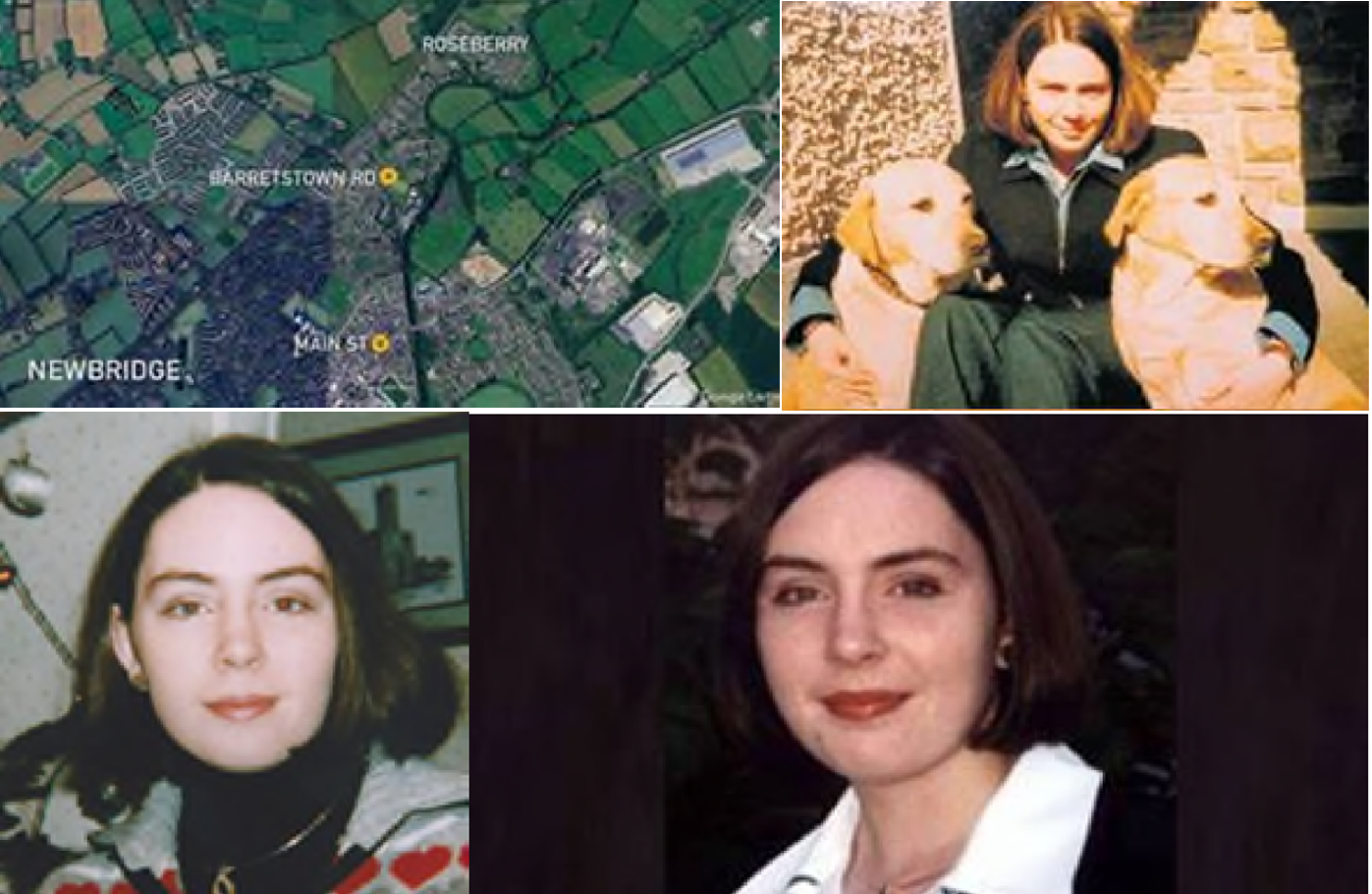
On the 28th July 1998, 18-year-old college student Deirdre Jacob walked into Newbridge town. She was to start her second year of teacher training at St. Mary’s College in Strawberry Hill, London and was getting a bank draft to send to a college friend in London for their rent deposit.
She went to the bank to get the draft, then the local post office and visited her grandmother at her shop before heading home to Roseberry just outside the town. She was last seen shortly after 3pm at the gate of the family home outside Newbridge. Despite an intensive investigation, including searches and appeals there has been no trace of Deirdre.
Description of Deirdre:
- Height - approximately 5ft 3inch (160cms)
- Build - slim build
- Hair - dark chin-length
Clothing:
- Navy V-neck T-shirt with while trim
- Navy dark jeans and blue Nike runners.
- A distinctive black satchel type bag with long shoulder straps and the word CAT in large yellow capital letters on the side. The black satchel bag has never been located.
Garda Appeal:
- Deirdre’s family and Gardaí are reaching out to the general public for information concerning her disappearance and what is now being treated as a Murder Investigation
- Did you see Deirdre as she walked from Newbridge town to Roseberry, Newbridge – making her way home?
- Did you interact with or see Deirdre on the 28th July 1998 especially in the AIB, Post Office or along her route that day?
- Do you have any information in relation to the ‘CAT’ satchel bag?
- Have you held on to some piece of information that may assist the investigation? If so we would like to assure you that we will be treated with empathy and compassion. The case remains open and active and your help could be the piece that makes all the difference?
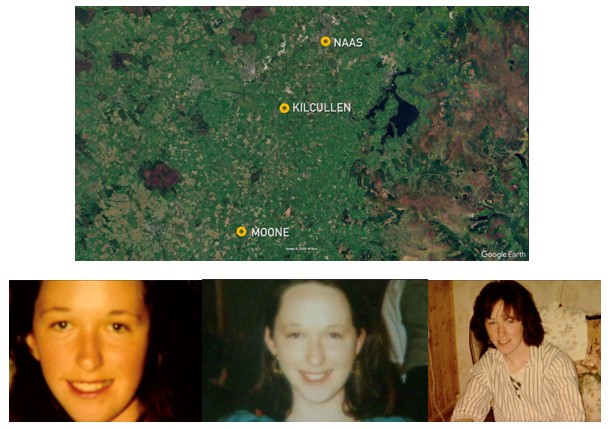
The Gardaí at Newbridge Garda Station are investigating the disappearance of twenty-one-year-old Jo Jo Dullard who is missing from her home since Friday 9th November 1995.
Jo Jo left her home in Callan, Co. Kilkenny at 8.30am on the morning of the 9th December to travel by bus to Dublin to collect her final social welfare payment from the Harold’s Cross post office.
She met some friends in Bruxelle’s Pub, just off Grafton Street and stayed with them all afternoon. She decided to head home to Callan arriving at Busarus Bus Station, Store Street at approximately 10pm. She missed her bus to Callan, so she boarded the Kildare bus instead and arrived in Naas at around 10.50pm.
Jo Jo hitched a lift from a motorist in Naas who dropped her off in Kilcullen, County Kildare, near the edge of the motorway. At about 11.15pm Jo Jo hitched another lift from here and was dropped off at Moone Village, Kildare at 11.35pm.
Jo Jo called her friend from a phone box at Moone, County Kildare and explained that she missed her bus and was going to hitch her way home. She interrupted the conversation briefly and when she returned indicated to her friend that ‘’ she just got a lift’’. This was the last sighting of Jo Jo.
Josephine Dullard, known as Jo Jo, was born in Callan, County Kilkenny on the 25th of January 1974, she would be fifty two years old. This year will marks the 31st anniversary of her disappearance. She has not been heard of or seen since this night.
Appeal:
- Despite the fact that it has been over thirty years since Jo Jo disappeared, Gardaí are anxious that anyone coming forward with information will be treated in a sensitive manner.
- Do you have information that you are unknowingly holding onto that may assist the investigation.
- Did you at the time of Jo Jo’s disappearance speak to investigating Gardaí and now feel that there is some additional piece of information that you now want to impart.
- Jo Jo’s family are seeking closure, can you help them?
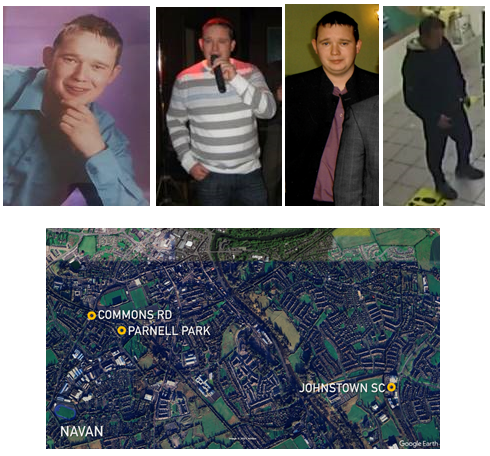
Garda at Navan station together with the Duffy family are looking for assistance in locating missing person Mark Duffy (now 46 years old).
Mark was last seen on October 3rd 2022, when at 10.50am he went to the post office in the Johnstown Shopping Centre, Navan.
Later that day at approximately 2.45pm Mark was seen walking on Commons Road, Navan, in the direction of McDermott Villas, which leads onto Parnell Park. This is the last confirmed sighting of Mark.
Mark was subsequently reported missing on October 13th by a family member who became concerned when she hadn’t heard from him. A Garda investigation was launched and it was established that there had been no sightings of Mark since October 3rd, nor had his phone been used. It was also established that he hadn’t left the country.
Gardaí subsequently conducted searches of the Navan and River Boyne area, but there have been no sightings of Mark or evidence of his whereabouts.
Description of Mark:
- - Height - 5ft 8 (172cms)
- - Medium build
- - Blue Eyes
- - Brown hair
- - Tattoos on the inside of both forearms of his children’s names
- - Walks with noticeable limp
Clothing:
- - Dark clothing with a cream hoody underneath, the hood of which was outside his jacket.
Garda Appeal:
- - Did you see or speak to Mark on October 3rd or in the days leading up to it?
- - Mark was last seen on CCTV at the Commons Road shortly before 2.45pm. Where you in the area around this time? Do you know where he went from here?
- - If you think you may have seen Mark or that you may be able to assist the investigation, Gardaí would like to assure that you will be dealt with in a compassionate manner.
This month, Crimecall included an extended Roads Policing segment offering advice to road users across the Four Garda Lifesaver offences that contribute to fatal collisions on our roads. Life Saver Offences:
- Speeding
- Driving under the influence – drink / drugs
- Non wearing of seatbelts
- Using a mobile phone while driving
The segment included contributions from the family of Cian Mooney who was killed in a collision near Piltown, Co Kilkenny, in 2022.Cian’s parents Eamon and Sylvia made the brave step of speaking about their loss in the hope that it would help saves others from experiencing a similar tragic loss.
Review of Fatalities (Sergeant Tony Miniter):
While the number of fatalities on our roads since the beginning of 2026 is currently (83), be under no illusion there have been far more lives destroyed than just (83). Each one of these deaths on our roads has had an absolutely catastrophic effect on each of the families that have lost a loved one…. Fathers, mothers, sons, daughters, friends, clubmen and women. The tsunami of grief that follows after a fatal road traffic collision is far beyond what anyone can imagine.
Choices and Consequences:
After almost 33 years in An Garda Síochána, with (22) of these in roads policing I have come to realise that it’s a matter of choice. The vast majority of fatal collisions that I have attended all have begun with someone making a choice. A choice to speed, a choice to pick up that phone, a choice to drive while under the influence of drugs. What people don’t realise or understand is that the consequences of THEIR choice can have absolutely catastrophic consequences, sometimes for themselves and for other people.
What I would strongly encourage all of the people watching here tonight is to understand that the choices that you make…. you make…. can and sometimes does have fatal consequences. I have seen it time and time again over the years at the scene of these fatal or serious injury collisions. Decent people, hardworking people who in their eyes would never harm another person are left with blood on their hands.
Road safety is not pretty, road safety is not nice and as we head towards the summer months, there are (83) families that will spend this summer without a son, a daughter, a parent, a friend. (83) families, which is an increase of (7) from last year. Some decisions you make last a lifetime.
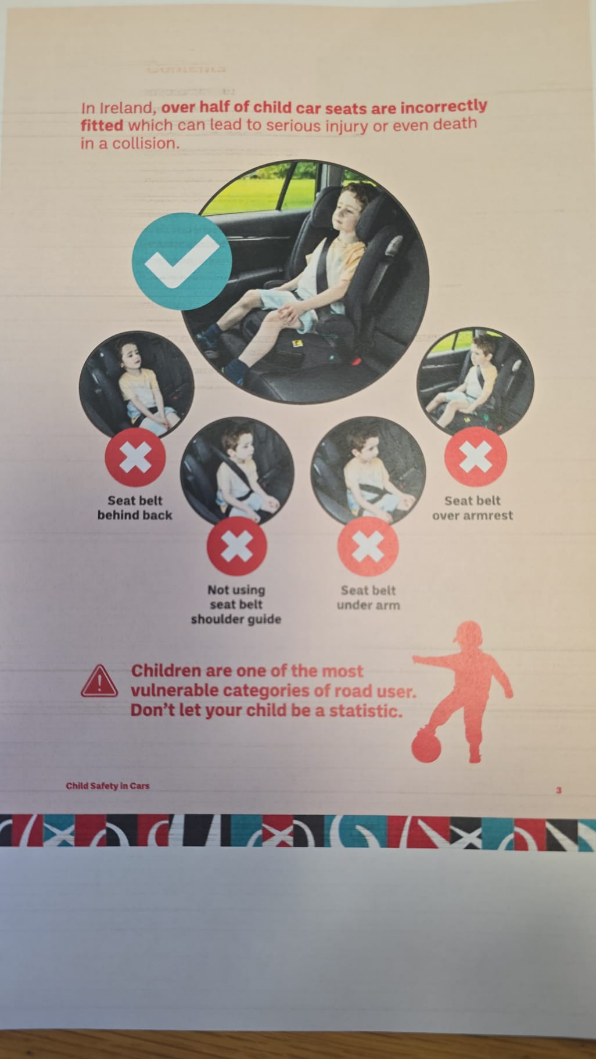
One of the other key elements to be being safe while in a vehicle is to make sure and wear a safety belt. Actually it’s not just wearing your safety belt, but to wear it properly. A handy guideline is to touch your left shoulder with you right hand. This is the same line that your safety belt should be across your chest. It can be very dangerous to wear your safety belt under your arm. It can also be highly dangerous to be sitting on your safety belt while it is clicked into place. There are pre-tensioners on all modern car safety belt systems and if this is triggered, which can happen even in slow speed collisions, then it can have devastating consequences. An Garda Síochána would advise all people who are travelling in vehicles to always wear your safety belt. The message is quite simple – Safety Belts Save Lives
Introduction
Children are among the most vulnerable road users, and ensuring they are properly restrained while travelling in a vehicle is one of the most effective ways to reduce the risk of death or serious injury in a collision. The Road Safety Authority (RSA) highlights that between 2014 and 2023, (68) children lost their lives on Irish roads and (980) children were seriously injured. Alarmingly, a significant proportion of vehicle occupant fatalities involved people who were not wearing seat belts or using appropriate restraints. Proper use of child restraint systems is therefore a critical road safety measure.
The Importance of Child Restraints
A properly fitted child restraint system (CRS) keeps a child securely positioned during sudden braking or a collision. Child car seats and booster seats are specifically designed to protect a child's developing body by distributing crash forces and reducing the likelihood of serious injury.
Research consistently demonstrates that children who are correctly restrained are significantly less likely to suffer fatal or life-changing injuries in road traffic collisions. However, many child restraints are either incorrectly fitted or not used at all, reducing their effectiveness and increasing risk.
Irish Legal Requirements
Under Irish law, all children under 150 cm in height or 36 kg in weight must use an appropriate child restraint system suitable for their size while travelling in a car or goods vehicle. Examples include rear-facing infant seats, forward-facing child seats, and high-back booster seats. Drivers are legally responsible for ensuring that children under 17 years of age are appropriately restrained.
The RSA also emphasises that:
- Rear-facing child seats must never be placed in front of an active airbag.
- Child restraints must comply with current European safety standards.
- Children should remain in rear-facing seats for as long as possible within the manufacturer's limits.
- High-back booster seats are recommended over booster cushions because they provide additional head, neck and side-impact protection.
Current Safety Standards
Since September 2024, child seats sold within the European Union must comply with UN Regulation R129 (commonly known as i-Size). These seats undergo more rigorous testing than the previous R44 standard and provide enhanced protection, particularly for the head, neck and side-impact collisions. The RSA advises parents to look for the approved "E" mark when purchasing a child seat.
ISOFIX systems, now standard in most modern vehicles, help reduce installation errors by allowing child seats to attach directly to the vehicle structure. This significantly improves the likelihood that a seat is fitted correctly.
Common Risks and Mistakes
The RSA identifies several common errors that can compromise child safety:
- Loose or poorly adjusted harnesses
- Incorrect routing of seat belts through the child seat
- Using a seat that is too large or too small for the child
- Using a child seat that is incompatible with the vehicle
- Allowing children to remove harness straps or unbuckle restraints during journeys
- Continuing to use damaged or outdated seats
Parents and caregivers should regularly check that harnesses are correctly adjusted and that children remain comfortably and securely restrained throughout every journey.
Public Education Campaigns
Across Europe, road safety authorities conduct continuous public awareness campaigns that highlight the consequences of failing to restrain children properly. These campaigns frequently use real-life collision scenarios, survivor stories and educational materials aimed at parents, grandparents and caregivers.
Professional Seat-Checking Services
In Ireland the RSA provide free child seat inspection and fitting services "Check It Fits" programme follows this model by offering expert advice and practical assistance to parents. Such services help address the widespread issue of incorrectly fitted child restraints.
Strong Enforcement and Compliance
Countries with high levels of child restraint compliance combine public education with visible enforcement. Police and road safety agencies routinely monitor seat belt and child restraint use, reinforcing the message that child safety is a shared responsibility.
Recommendations for Parents and Caregivers
To maximise child safety in vehicles, parents and caregivers should:
- Use an approved child restraint suitable for the child's height and weight
- Keep children rear-facing for as long as possible
- Use ISOFIX-compatible seats where available
- Choose high-back booster seats rather than booster cushions whenever possible
- Have child seats professionally checked or fitted
- Ensure harnesses and seat belts are correctly adjusted on every journey
- Never leave children unattended in a vehicle
- Replace child seats that have been involved in a collision or show signs of damage
Conclusion
Every journey, no matter how short, requires children to be properly restrained. The evidence is clear: correctly fitted and appropriately used child restraint systems save lives and reduce serious injuries. By following RSA guidance and adopting proven European best practices such as extended rear-facing travel, professional seat fitting checks and continuous education, parents and caregivers can significantly improve the safety of children on Ireland's roads. Child safety in cars is not simply a legal requirement—it is a responsibility that protects our most vulnerable passengers and helps prevent avoidable tragedies.
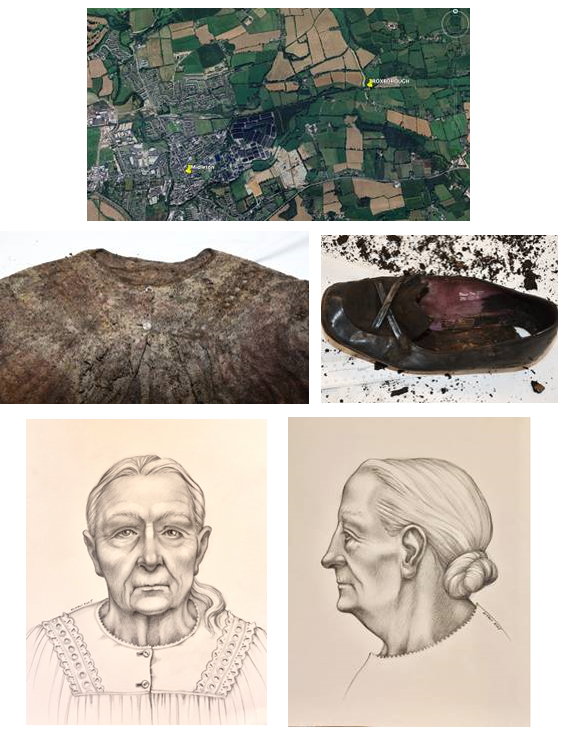
Gardaí in Midleton, Co. Cork are investigating the discovery of remains that were discovered by workers at a construction site on the Midleton to Youghal Greenway, just off the Shanty Path at Roxborough, Midleton, Co. Cork on Tuesday 5 January 2021.
On the date in question, building workers from Cork County Council were clearing an area just off the railway which had been used as an illegal dumping ground for a number of years. This area was not accessible as a walkway and it was overgrown with shrubbery trees and weeds.
The workers were in the process of clearing the site with a digger on 5th January 2021 when they discovered the human remains.
A full post mortem was carried out. DNA samples were obtained but when set against the National DNA Database, a match was NOT obtained. DNA of the deceased is currently on the national DNA database, European DNA database familial and there is currently a black notice on the DNA profile with Interpol.
The services of the Missing Persons Unit and the Garda National Protective Services Bureau were engaged. Items of evidence are currently being examined by a Forensic Scientist. Carbon dating and all available scientific resources have been engaged as part of the investigation. Carbon Dating and Isotope results, have indicated that the female passed away between 1985 and 1987, and would have had a healthy diet, consisting of the regular consumption and meat and fish.
A number of DNA samples have been taken from concerned members of the public, a positive match has not been obtained to date.
Examinations of missing person’s records have not identified any potential matches.
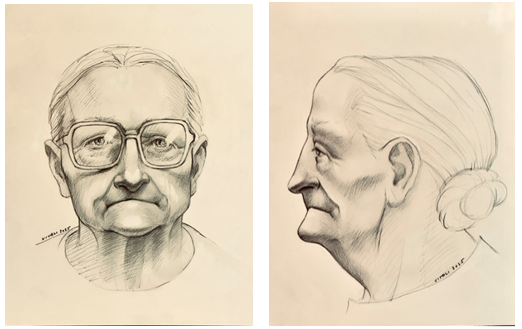
The investigation team have engaged the expertise of Dr. Michelle Vitali of PennWest University, a forensic artist, who is a specialist in facial reconstruction. Dr. Vitali has been working with of An Garda Síochána for a period of time, conducting analysis of the skull and dentures, and has completed an illustration / drawing of what the unidentified remains may have looked like.
Description of deceased:
- Remains believed to be that of a female aged approximately 70 years +
- Height approximately 5’0 to 5’2’’ (when alive)
- Large framed
- Suffered from Osteoarthritis
- Wore dentures – believed to have been made in the 1960’s.
- Was wearing a faded white garment on the upper body
- The clothing, most notably is a distinctive patterned Dress/Nightdress, which was buttoned to the collar
- Footwear, it is believed that the female had a small shoe size, around size (2), and Gardaí now believe that brown leather shoes, may have been those of the remains, and were probably privately made, possibly in the Cork City area.
Gardaí Appeal:
- Take a look at the sketches of this female, do you recognise her?
- Someone in the community must know how the skeletal remains came to be at this locality known as “tipping point” off the Shanty Path at Roxborough, Midleton, Co. Cork
- An Garda Síochána are determined to formally identify the deceased and treat her with the respect and dignity she deserves
- An Garda Síochána want and need to provide closure for a family that remain unknown and ensure that the remains are brought to a final resting place
- House to house enquiries were conducted in the local area, at the time the remains were found and the local missing person records were reviewed as have missing person records retained by the Garda National Missing Persons Unit
- Gardaí are appealing to the public for any information they may have, no matter how small, that could potentially assist with the investigation