Body-Worn Cameras
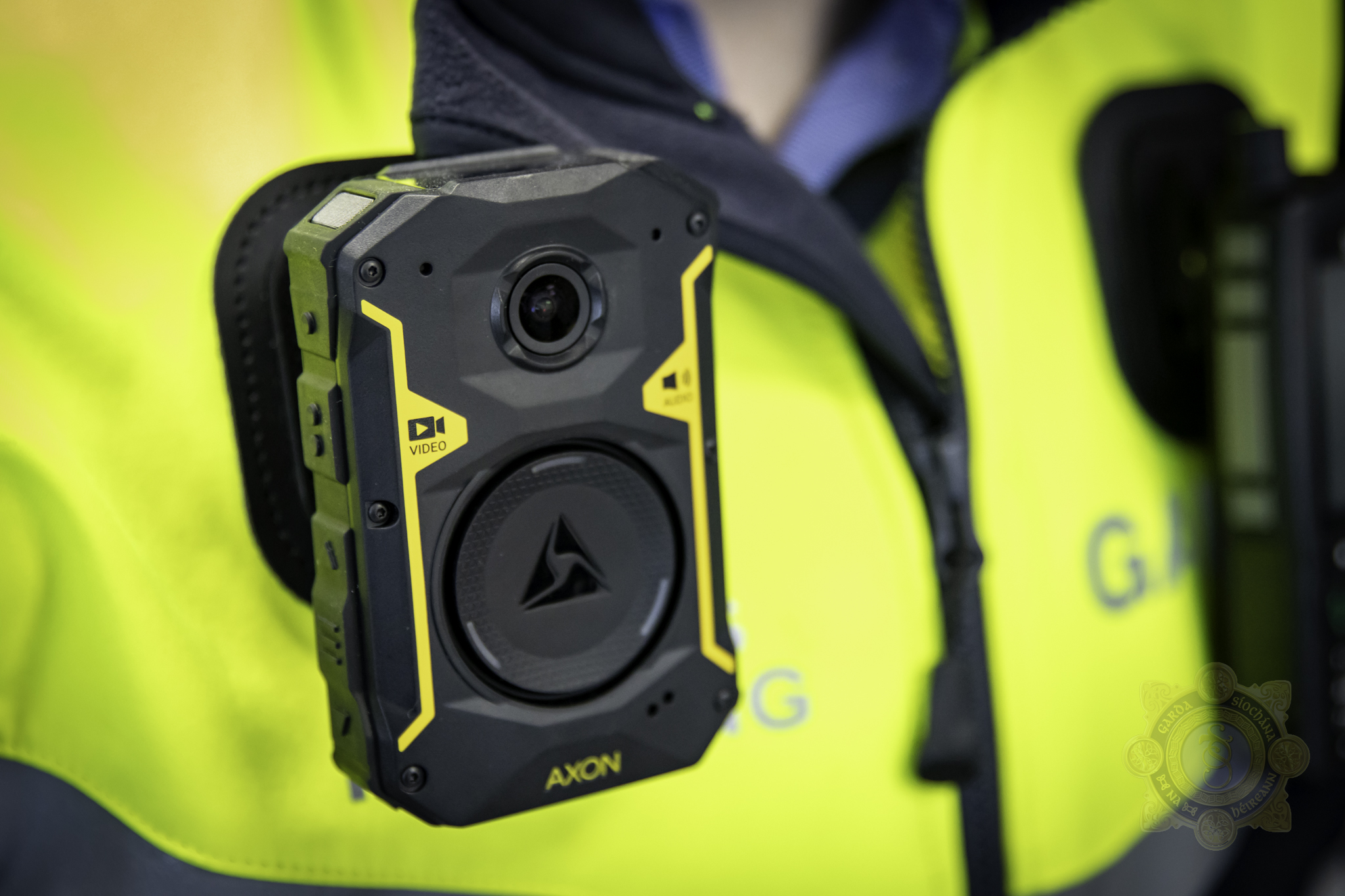
The 2018 Report of the Commission on the Future of Policing in Ireland (CoFPI) recommended that An Garda Síochána should make digital transformation and investment a priority in order to modernise the service. It also indicated that a digital strategy which would enhance front-line capabilities and facilitate inter-agency cooperation, should be created. The report contains ten key principles for the future of policing, and provides that policing must be “adaptive, innovative and cost effective”. The eighth principle of the CoFPI Report is that policing should be information-led with recommendations on support for effective processes, data quality and access, and increased analytics capability. The tenth principle includes recommendations on modernising core technology platforms, the introduction of Body-Worn Cameras, and the timely access to information.
The Garda Síochána (Recording Devices) Act 2023
The Garda Síochána (Recording Devices) Act 2023 was enacted on 5th December 2023. The Act provides a modern and robust legal basis for the deployment of Body-Worn Cameras by An Garda Síochána. In accordance with section 47(1) of the Act the Garda Commissioner must prepare a Code of Practice or multiple codes of practice, to provide further detail on the operation of a recording device and any associated procedures.
A programme team to accelerate the rollout of Body-Worn Cameras has been established and this public consultation is part of this process, as is engagement with relevant Government departments. Exact timelines on the roll-out of body cameras are dependent on financial approval and completion of the procurement process.
What are Body-Worn Cameras and how will they be used?
Body-Worn Cameras are video and audio-recording devices which can be attached to a Garda's clothing. When a Garda actively switches the device on, it will retain audio and video footage until switched off.
Body-Worn Cameras may be activated during specific incidents, such as where a member of An Garda Síochána believes a criminal offence is being committed, where they may be required to use force or when executing court orders or warrants. The full range of circumstances in which a Garda Member may utilise Body-Worn Cameras is laid down in the Garda Síochána (Recording Devices) Act 2023. Body-Worn Cameras will be visible on the Garda Member’s clothing and a light on the front of the camera will indicate when it is recording.
When activating a Body-Worn Camera, the Garda Member should make efforts to inform members of the public present at an incident that recording is occurring. Garda Members using Body-Worn Cameras will receive training in their use, which will align with the finalised Code of Practice to be published as a Statutory Instrument.
Introduction of Body-Worn Cameras
Body-Worn Cameras have been trialled in five Garda stations since 2024 as part of a Proof of Concept process and a draft Code of Practice was put in place to support this process.
These Garda Stations are:
- Dublin City Centre (Store Street, Pearse Street, Kevin Street) 31 May 2024
- Limerick City (Henry Street) 01 August 2024
- Waterford Garda Station 05 September 2024
A programme team to accelerate the rollout of Body-Worn Cameras has been established and an updated draft Code of Practice has been developed to support this. Next steps include engagement with relevant Government departments and a public consultation; under Part 8 of the Garda Síochána (Recording Devices) Act 2023, the Garda Commissioner is required to conduct a consultation process seeking the observations of the public on every Code of Practice developed. Exact timelines on the roll-out of body cameras are dependent on financial approval and completion of the procurement process.
Body-Worn Cameras Code of Practice consultation process
In addition to seeking the views of the public the Garda Commissioner is also mandated to seek views from the:
- Minister for Justice, Home Affairs and Migration
- Policing & Community Safety Authority
- Office of the Police Ombudsman - Fiosrú
- Data Protection Commission and
- Irish Human Rights and Equality Commission
Prior to the Code of Practice being issued in a Part 8 consultation process, a Human Rights Impact Assessment was conducted and a Data Protection Impact Assessment will also be conducted before the Code of Practice can be considered by the Minister for Justice, Home Affairs and Migration for publication as a Statutory Instrument.
Share your views
An Garda Síochána collected feedback from the public on this draft Code of Practice. Feedback submissions closed on the 13th of January 2026. Any personal data that was provided by respondents as part of their responses was processed under Article 6(1)(a) and Article 9(2)(a) of the General Data Protection Regulation (GDPR) and Section 55(1)(b)(i) of the Data Protection Act 2018, as applicable. Any personal data provided will not be retained for longer than is strictly necessary for the purposes of any analysis or reviewing of the feedback results.
A previous public consultation was run for the Proof of Concept for Body-Worn Cameras. Read more about that here.