Advice on bike theft
An Garda Síochána is appealing to cyclists to take extra precautions in keeping their bicycles safe by locking them in the most secure way possible.
Crime Prevention Advice:
- Spend 10% to 20% of the value of your bike on two locks.
- Lock your bike tightly to an immovable object.
- Keep the lock off the ground.
- Take a photo of your bike, note the serial number and email it to yourself so that you have a record of it.
- Lock your bike indoors or in well-lit areas if possible.
Property Marking
Property marking is a process where a physical mark is etched onto a piece of property such as a bike, laptop or tools.
The mark is made by a specially-designed machine which embosses the property item with small dots in the pattern of the owner’s Eircode – to make it harder for criminals to sell on stolen property.
Property marking engagement days are held by local community policing units and regularly highlighted on An Garda Síochána social media sites. Contact your local Garda station for more details.
Neighbourhood Watch
 Neighbourhood Watch is a crime prevention and community safety programme for urban areas. It operates as a partnership between An Garda Síochána and the public. It works on the basis that every member of a community can help to improve the quality of life in the area by keeping a look out for neighbours and reporting suspicious activities to the Gardaí.
Neighbourhood watch programmes aim to improve community safety, prevent crime, develop Garda and community links, increase public confidence in An Garda Síochána, foster a caring environment for older and vulnerable people and reduce anti-social behaviour, including graffiti and harassment.
To set up a scheme in your area, contact your local Garda Station
Community Alert
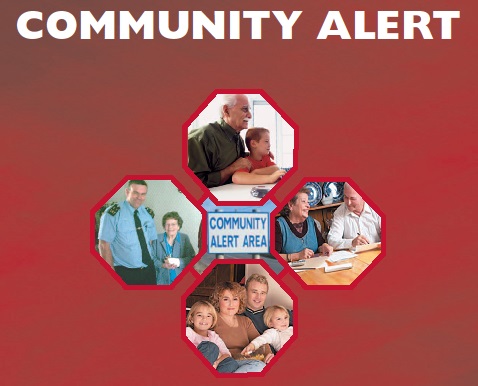 Community Alert is a community safety programme for rural areas with an emphasis on older and vulnerable people. It operates as a partnership between the community, An Garda Síochána and Muintir na Tíre. It works on the principle of shared responsibility for crime prevention and reduction. Community Alert programmes aim to foster the process of community development, reduce opportunities for crimes to occur, unite communities in a spirit of neighbourliness and community service and to devise programmes to improve the quality of life for all in rural communities.
There are over 1,250 Community Alert Schemes. To set up a group in your area, contact your local Garda Station or your local the Muintir na Tíre Community Alert Development Officer (Tel: 062-51163 or view a list of Development Officers).
Coastal Watch
Report unusual activity that may help prevent or detect a crime here.
Coastal Watch is a community-based crime prevention initiative involving residents, businesses, landowners, government agencies, voluntary emergency services, and An Garda Síochána. Its purpose is to raise awareness and encourage those who live, work, or use the coast to help prevent and detect crime.
Objectives
Coastal Watch aims to:
- Improve safety and security for coastal communities and users
- Deter and detect illegal or suspicious activity along the coastline
- Provide crime prevention advice for local residents, businesses and visitors
- Strengthen cooperation between communities, An Garda Síochána, Revenue, local authorities, and emergency services
Coastal Watch aims to highlight the reporting of unusual activity that may help prevent or detect a crime, such as:
- Unexplained movements at night by individuals or vehicles on land or sea
- Unknown boats landing in remote locations
- Ribs/ boats with names removed or concealed
- Ships away from their normal shipping lanes
- Unusual objects at sea or ashore
- Persons moving large quantity of diesel
- Persons booking short-term accommodation at late notice and paying in cash
- Persons arriving in an area with a large amount of recently purchased sea worthy outdoor clothing
- Persons acting unusually
- unexpected tyre tracks on laneway
- vehicles parked in unusual places
- Intentionally destroyed vehicles
- Illegal dumping
- Illegal fishing
- Illegal salvage
- Misuse of safety equipment
- Property damage, arson or vandalism
- Wildlife crime
In case of emergencies call:
- Emergency Number 999 / 112
- Garda Confidential Line 1800 666 111
Text Alert
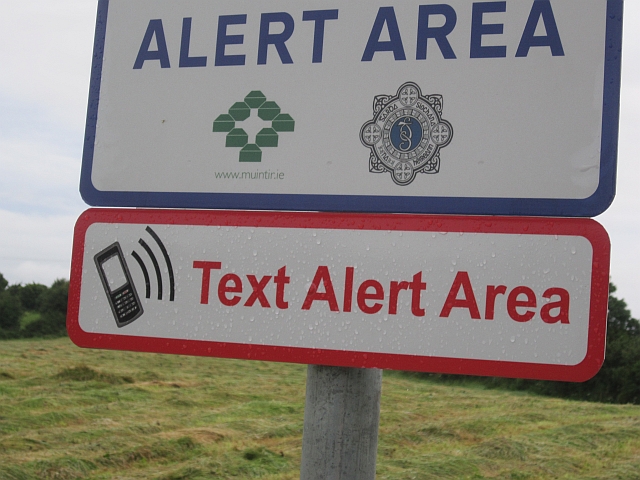 Text Alert enables communities to set up a group to receive alerts advising them of suspicious or criminal activity in their area. As well as ensuring awareness among users of the service, it can also lead to them reporting suspicious activity to Gardaí. Sending the information by text means that it can be disseminated rapidly to a large amount of people in a cost-effective way. Text Alert is a one-way system, and operates on the following principles:
• Member(s) of the public reports incident to the Gardaí (24-hour Garda District -Telephone number which is widely advertised)
• The reporting Garda verifies details and determines that the "Text Alert” system should be utilised
• Garda sends text or e-mail out to each registered "Community Contact” in their Garda District
• Each "Community Contact” forwards the text to their "Community Group” to advise the public to watch out and report any developments
• If the information is received by e-mail the Community Contact may forward the e-mail or convert the content to SMS Text and send to their Community Group.
Campus sites are busy places with large numbers of people going about their daily routines. They form a concentration of a vast range of people from: campus staff, workers, visitors, to the students themselves.
The very nature of a campus, where unfamiliar faces are common and accepted, lends itself to the work of the criminal who can blend in quite easily around halls of residence. For example, it is not unusual to see people carrying backpacks and other items without suspicion.
For students on tight budgets, expensive items are difficult to replace, and it is highly advisable to spend a short time considering how effective measures can be taken to reduce the possibility of theft. The good news is that there are a number of actions you can take to reduce the chance of becoming a victim of crime.
Campus Watch is similar to a residential Neighbourhood Watch scheme in that it is a crime prevention and community safety programme. It operates as a partnership between An Garda Síochána and the Campus occupants. It works on the basis that every member of Campus can help to improve the quality of life on site by keeping a look out for students, staff and visitors, and reporting suspicious activities to the Gardaí.
Protecting your business
Burglary and vandalism are ongoing security concerns for retail and commercial premises. Crime can also act as a serious barrier to economic development. Direct losses arising from theft, or attacks on property and vandalism, can undermine or risk the viability of many businesses.
 An Garda Síochána's Bureau of Community Engagement runs a number of initiatives and programmes helping businesses protect their premises, goods, and assets. Retailers looking for further information should download our Retailers Security Information Pack which contains helpful information on the popular 'Business Watch' scheme, various theft reduction and prevention strategies, CCTV, and a Retail Security Guide.
Preventing burglary and vandalism
The physical protection of a retail premises from burglary and vandalism follows the crime prevention principle of ‘protect from the perimeter inwards’. Ensuring that premises are well protected and present a high risk to the prospective offender can reduce the opportunity for burglary. Well-protected premises with good security procedures will deter the criminal from attempting to enter or damaging the premises. In the event of a robbery, the offender will have less time available to commit the crime and the chances of being apprehended are increased.
Here are some actions retailers or business owners can take to help prevent crime:
- The premises should remain well-illuminated after closing to ensure high visibility and increase the likelihood of intruders being noticed.
- Grilles or shutters should be considered to provide a solid barrier around the shell of the building to help prevent intruders gaining entry.
- Some roll-down grilles provide physical protection whilst still allowing window shoppers to see into the premises.
- Internal grilles may be fitted which will have a similar level of protection for the premises only leaving the glass windows and/or the doors exposed.
- Anti-ram bollards, removable during trading hours, may be used in conjunction with shutters or grilles.
- Laminated glass may be used in the windows to increase resistance to attack.
- Anti-climb brackets may be installed on conduits, drainpipes etc., to prevent intruders gaining access to the roof.
- Doors and locks should be fitted and maintained to recognised security specifications.
- Cash Tills, after trading hours, left open and empty - cash amounts held on the premises should be kept to the minimum in proper security cash safes.
- Access to the premises should be restricted during closing hours and all keys issued should be inspected on a regular basis. A modern access control system should be considered.
- An intruder alarm system to standard (EN 50131) should be installed and connected to an approved monitoring station to standard (IS 228/97). Panic Attack Buttons - double push type - for persons operating in cash areas should be included in the systems.
- All locks and safes should be to a high security quality with a regulated locking/unlocking system established and responsibility for their opening/closing clearly delegated.
- CCTV cameras should be strategically positioned, in line with operational requirements, both inside and outside the retail premises. The positioning of cameras at all public entrance(s), with captured images of persons to recognition standard, should be paramount, as this will be an important factor in post-incident analysis and the investigation of captured images will determine their subsequent value for evidential purposes.
- Unnecessary boxes, skips or other obstructions should be removed from the vicinity of the premises – these are potential aids to the burglar and attract the vandal. Within stores, displays and goods should be organised to allow for maximum visibility and accountability. Toilets, storerooms and other possible hiding places should be visited when the store is being locked. If there is a constant threat of burglary or vandalism at the premises, or in the vicinity, the use of a manned security patrol or in-house security may need to be considered.
Opening and closing procedures
Retail opening and closing times are high-risk periods in security terms. The number of employees present, their knowledge of access control and security systems and predictable patterns in arrival and departure make this a particularly vulnerable time for criminal activity.
- Responsible and designated personnel, preferably two, should be appointed to carry out opening and closing functions. They should try to avoid any regular long-term pattern being followed, as this would allow procedures to be pre-supposed by
- The names and contact information for all key holders should be available to the Gardaí.
- The cutting of extra keys or the use of master keys should not be permitted.
- In cases of multi-occupancy premises, an overall security procedure should be agreed among the parties concerned.
Cash and security control
Cash has always been a prime target for criminals, and as such requires detailed security plans for its safe storage and retention on a retail premises. Criminals in search of cash are frequently armed with guns, knives or other offensive weapons. In some cases cash robberies have resulted in the loss of life or serious injury.
- The cash office of a retail outlet should be situated out of view from public areas and as far away as possible from entrances/exits.
- The office should be access controlled and under CCTV camera surveillance.
- The cash room should be of solid construction with security standard doors and windows.
- Where windows are fitted; the glazing should conform to recognised quality and security standards.
- A high-quality safe should be installed within the cash room and rag-bolted to a concrete floor or chute facility and ideally fitted with a time delay locking mechanism. It should have separate compartments to facilitate prepared lodgements. The opening time of the safe should be varied each day.
- For greater security, or in large outlets, a pneumatic tubing system can be installed to transport cash directly into the safe from the tills.
- A Cash Transfer Unit, which facilitates the transfer of cash between the cash office and the Cash in Transit Vehicle, may be built into an external wall of the cash office.
- A double push type PAB (Panic Attack Button) should be placed on each work position within the cash office.
- The use of electronic interlocking doors should be considered in high turnover outlets.
Lodging cash
A reputable cash-in-transit company should be considered to transport all cash in and out of retail premises. Staff dealing with persons from the cash-in-transit company should never hand over money or open any door until they are completely satisfied that the security collection personnel are genuine - if any doubt exists they should contact the cash in transit company directly to verify matters.
Where a cash-in-transit company is not a viable option for certain retailers the following safety guidelines apply:
- Bank at the closest establishment possible.
- Vary the times of banking, the mode of transport and the route taken.
- Only experienced, responsible members of staff, at least two, should be tasked with transferring bank alarm and destruct facilities (e.g. smoke and dye units), should be utilised.
- Bank, when possible, during daylight hours.
- Adhere to the insurance cash limits for persons transferring lodgements to banks.
- Persons transporting cash who become suspicious of other persons, or other activity, should abort their intended arrangements and report to the nearest Garda Station either in person or by phone to seek advice and assistance.
Cash Tills
- Cash till points should be sited in an area which affords a good view of the shop floor.
- Till limits should be set and adhered to.
- The till should be securely anchored to a solid surface.
- A double push type PAB (Panic Attack Button) should be situated within easy reach of the till.
- Tills should be manned at all times and if left, even for a short time, should be locked and the keys removed.
- Only experienced staff should operate tills.
- Video till security systems which allow purchase verification should be considered where multiple operators utilise the same machine.
- A guard in the form of Perspex sheeting, or similar, as a deterrent against till snatches should be fitted.
- In high risk situations bullet resistant screens may be necessary.
Preventing robbery
Any plan to protect against robbery must be designed to secure the safety of employees and customers, reduce the loss and affect the arrest of the criminals. It is therefore most important that a general plan, known and understood by all staff, is adopted. The staff plan can be divided into three sections as actions to be taken before, during, and after a robbery. All employees should be advised as follows:
Action before a Robbery:
- Provision should be made for the maximum surveillance of public areas, inside and outside the building, by all staff.
- Any security arrangement which reduces visibility and permits a thief to face a single employee should be avoided.
- There should be adequate emergency external communication facilities in place. (Alarm Panic Attack Buttons, concealed phones etc.).
- Liaison should be regularly maintained with local Gardaí on methods used by criminals and security procedures reviewed accordingly.
- Staff opening and closing the premises should be instructed to be particularly vigilant. They should survey the street before entering or leaving and be particularly suspicious of persons loitering. They should not hold conversations with the door partly to others that all is well by use of a simple code system, e.g. raising or lowering a blind, removal of a card from the window, etc.
- Advertise, with suitable posters, the security measures in place to deflect potential thieves (e.g. timelocked safes, CCTV, alarm systems).
- Maintain a package of ‘Bait Money’ with recorded serial numbers.
- The risks should be spread by avoiding having large amounts of cash in one location.
Action during a Robbery:
- Staff should co-operate with the criminal(s) and avoid sudden or unexpected movements, which the latter may misconstrue as an alert signal. Activate any alarm system ONLY if it is safe to do so.
- Obey. They should do only what they are told. They should not try to overpower a thief, as there may be others whom they have not seen.
- They should observe closely and look for the unusual: gait, scars, tattoos, earrings etc. and try and make a mental note of the description of the culprits.
Action after a Robbery:
- Preserve. Contact made by the thieves with all surfaces, tills, counters, floors may leave microscopic evidence behind. This may be fingerprints, cloth fibres, and soil residue. Most probably it will be invisible to the naked eye. It is therefore vital that no cross-contamination takes place by persons unwittingly touching or interfering with the crime scene. Preservation is best achieved by closing the premises and cordoning off the area the thieves have
- A short written memorandum of all that occurred should be made. Descriptions of the culprits, car registrations and names of customers who may have been present during the robbery should be recorded. This can later be invaluable if a witness is challenged about the accuracy of his or her observations in any subsequent court case.
- Ideally, all customers should remain on the premises until the Gardaí arrive to commence investigations. It is advisable that media enquiries about the matter be referred to the Garda Press Office.
Stock Security and Control
Stock security and control within retail and commercial businesses will depend largely upon good co-ordination between management, staff, security personnel, and store detectives. All staff should receive training or instruction to advise them of the security requirements and procedures for handling of stock. The crime prevention advice offered should include the following:
- Only an optimum level of stock should be retained on the premises, and stock requirements and holding procedures reviewed regularly for security purposes.
- Responsibility for stock handling should be shared amongst designated staff.
- Stock loading areas should, if possible, be located away from public areas, streets etc.
- The loading and unloading of stock should be supervised and all transactions recorded.
- Stock containers should be sealed and clearly identifiable with security markers.
- High value stock within the retail area should be security tagged, with electronic article surveillance systems in place, that are selected, installed and operated according to an approved security standard.
- Stock items in the retail area should carry a tag displaying the name of the shop and the price of the to be charged and the possibility of the stock being purchased elsewhere.
- High value goods which are easily portable should be kept out of sight at night.
- Displays which cannot be supervised should be
- Open displays, and in particular those of high value goods, should not be sited near the entrance/exit
- Staff should ensure that customer receipts are issued for all transactions.
- Where there are large stocks of high value goods, the installation of security grilles or shutters should be considered.
- Stock rooms should be secure, and inconspicuous in décor and location within the premises so as not to attract undue attention.
- All stocks should be checked on delivery and rechecked in the storeroom. The movement of all stock should be recorded and accounted for by designated staff.
- Stock requisitions should be checked by some person other than the Issuing Authority.
- Spot checks should be carried out on stock levels.
- Visitors to the stock area should be kept to the minimum for work purposes, and always escorted.
- Loading bays and stock rooms should be locked when not being actively used.
- Stock rooms and stock loading areas should be under constant CCTV surveillance.
- The removal of waste/damaged stock should be supervised by nominated personnel and carried out by commercial refuse services.
- The effectiveness of security systems and crime prevention measures should be regularly evaluated against the rate of stock loss.
Shoplifting
Losses from shoplifting by staff in the retail sector can amount to a considerable percentage of all losses incurred. Good supervision generally helps to deter dishonesty. Retail staff often turn to dishonesty through temptation, or in the belief that they have invented a new way of theft that can go undetected.
- No member of staff should be allowed to process his/her own purchases, or those of relatives.
- The times and method of staff purchases must be strictly authorised, controlled and subject to examination.
- Staff cloakroom facilities should be provided near the staff entrance and employees should not be allowed take handbags/bags onto the selling floors.
- If a staff uniform is provided it must be worn.
- Supervisors should regularly check purchases awaiting customer collection to ensure that they are bona fide sales, thus discouraging staff/customer mcollusion thefts.
- Regular but frequent spot checks at cash points are essential and “No Sale” recordings should be examined.
- Test purchases should be made by management or security personnel to ensure adherence to company security policy.
- Senior management should outline to staff the position regarding current stock shrinkages. This will tend to create security awareness and deter dishonesty.
- There should be a policy of reporting to the Gardaí all cases where staff are involved in dishonesty.
Preventing customer theft
Loss through customer theft is accepted as a fact of business life for some retailers, but nevertheless making it difficult for the customer or the professional shoplifter to take goods can greatly reduce this problem. The common causes of shoplifting include poorly trained staff, poor management, bad store layout, no security personnel on duty, and inadequate/lack of internal security such CCTV, alarms, mirrors, or security tagging.
Methods of Shoplifting
Common methods of shoplifting include:
Palming: Stealing small items and concealing them in the palm of the hand.
Switching Prices: Putting price tags from low cost goods onto more expensive goods.
Steaming: A large gang enters a shop, intimidates, threatens or distracts staff in order to steal large quantities of goods before running off. It can be dangerous to tackle these people, as they are likely to resort to violence.
Staff Collusion: Staff working in conjunction with the thieves by turning a blind eye to theft or colluding in the
Other methods can be the use of belts, special pockets in the inside lining of coats, wearing baggy clothes, brief cases, shopping bags, prams, and children’s buggies for concealment purposes. The professional shoplifter will try to overcome electronic security devices by removing tags in changing rooms, by stealing a de-tagger from the shop or using foil-lined bags. Attentive staff are the best asset in shoplifting prevention. Staff should be encouraged to be observant, and made conscious of the risk of customer theft. Too often this is left to security staff alone. Well-trained, alert staff can prevent a large proportion of theft.
- Staff should be trained to recognise thieves, as the thief will always be watching staff or looking around the shop rather than at the products.
- They should know what to do if they see a customer acting suspiciously; making a customer aware that he/she has been noticed will often be sufficient.
- Staff should use normal sales approach such as “Can I help you?” or make themselves busy near a suspect.
- If a theft has already occurred, staff should keep the suspect under observation and alert other staff, security and call the Gardaí.
CCTV cameras will deter some thieves and can help to prosecute the more daring ones. The cameras should be highly visible with warning signs on display. A camera should monitor the entrances to the shop to record thieves entering. Recordings may become evidence and must be kept under lock and key in an appropriate
Dealing with a Shoplifter
When a staff member or a member of security detects a case of shoplifting he/she should act as follows:
- The suspect should be kept in sight at all times.
- The staff member should be absolutely sure that a theft has taken place and that the suspect has the item stolen in their possession.
- It may be necessary to allow the suspect leave the shop to confirm that a theft has taken place. The suspect should not be approached until he/she passes the final cash point and heads for the exit.
- At this stage, the suspect should be approached, asked if they have forgotten to pay for the item(s) subject of the suspected theft and asked to come back into the shop to an interview room away from the view of other customers or staff.
- If possible two staff members should be involved in the process at this stage. The suspect should be given an opportunity to explain and produce the items involved. The staff member has no power of search and should call the Gardaí at this time.
- The staff member should record details of the incident, and the date and time in their notebook. When the Gardaí arrive at the scene they will then take charge and may arrest the offender if an offence is disclosed.
- All retailers should have a policy of prosecuting all identified shoplifters. It is one of the only deterrents available to them.
For further information on how to protect your business, check out An Garda Síochána's Retail Security Guide.
Current legislation in Ireland
The law in relation to shoplifting is contained in:
- The Criminal Justice (Theft and Fraud Offences) Act, 2001.
- Criminal Law Act of 1997- “Arrestable Offence”.
- Criminal Justice Act, 2006, and
- Criminal Justice Act, 2007.
These Acts can be viewed on www.acts.ie
Home Security
- Whether at home or going out, turn on some lights, use timer switches.
- Lock all doors and windows, almost 1 in 4 Summer time burglaries involve entry through an unsecured access point.
- Use your house alarm.
- Store keys safely; away from windows and letterboxes.
- Record details of valuables and don’t keep large cash amounts at home.
Vacant Houses
If your home is going to be vacant during the summer period;
- Ask a trusted neighbour or family member to conduct frequent checks of the property at different times of the day to note any signs of trespassing or interference.
- Ensure the house alarm is set.
- Check all doors and windows are secure. (Use deadbolt locks if property is to be vacant for long periods).
- Install timers on internal lights and motion detectors on external lights to make the house appear occupied and offer natural surveillance of the property.
- Ensure that the building doesn't look neglected. Cut the grass, trim hedges etc.
- Ask a neighbour to collect post or if you are going to be away for longer periods arrange a ‘mail minder’ service with An Post to retain post for collection and place a ‘No Junk Mail’ sign on letter-box.
- Inform the local Garda station about the premises being vacant to afford passing attention on patrols.
Social Media
If you are going on holiday and your home is going to be vacant, be mindful of what you post on social media. Even if you have enabled strict privacy settings, your holiday plans could be shared with unscrupulous people.
- Don't post status updates about your holidays while you're still away.
- Don't post pictures while you're away.
- Respect other people’s privacy, don't tag others while you and they are on holidays.
- Avoid posting upcoming travel plans.
- Consider turning off the location sharing setting of your phone's camera app.
Garden/ Landscaping
- Don’t help the burglar; safely store away ladders, tools etc.
- Use quality locks on Garden sheds, chain valuable property, tools, bikes, etc. within.
- Property mark and photograph valuable possessions.
- Tidy up gardens and shrubbery, this improves visibility and creates the illusion of an occupied home.
- Consider defensive planting, e.g. thorny plants around the perimeter, for extra security.
A barrier of prickly hedge along your boundary or underneath a window will help deter thieves. Hedges and shrubs in the front garden should be kept to a height of no more than 3 feet in order to avoid giving a burglar a screen behind which he can conceal himself.
Home security and Burglary Prevention Advice
Check out the Garda's popular 'Lock Up Light Up' anti-burglary campaign here. It encourages homeowners to protect their property during winter, when residential burglaries traditionally rise.
Signs of vacancy
The majority of burglaries take place in unoccupied homes. The following are some of the things a burglar looks for:
- No lights on at night, or just ‘dead’ lights on (porch, hall)
- Lights on constantly during the day
- Blinds pulled down, or curtains across during the day
- A build-up of papers and/or flyers in the letter box
- A build-up of letters in the hall or porch visible from outside
- A build-up of milk on the door-step
- Front gates closed and no car in the driveway
- Notes left for delivery men or callers
- Uncut lawn and untidy garden
Most burglars are opportunists and will select the easiest target that they can find. Don’t offer them assistance by:
- Leaving any window open. Some people do this for ventilation forgetting that burglars will take advantage of the smallest opening
- Leaving external doors unlocked
- Leaving a key on a string, under a doormat, or in some other ‘good hiding place’ outside
- Failing to secure side doors, allowing entry to the back of the premises, which is more vulnerable to attack
- Failing to keep garages and sheds locked. Not only do they contain valuable property, but also tools which may help the burglar gain access to your home.
Doors
Burglars prefer to enter homes through a door because, if disturbed the open door provides the quickest escape route.
Whether an intruder will gain access to your home through your external doors may depend on:
- the strength of the construction material
- the quality of the locks
- proper fitting and installation
If you are replacing your doors, you should consider doors that have already passed stringent security tests, such as PAS 24 2016, or for higher levels of security, doors meeting Irish & EU Burglar Resistant Security Standard IS EN 1627:2011.
Additional locks and limiters may be added for extra security. Remember to lock your doors. One in five burglars will enter a home via an unlocked door or window.
Click here for more information on doors
Windows
More than a third of burglars will enter your property through a window. A window’s individual vulnerability will depend on three main factors:
- The accessibility of the window
- The quality of the fabrication, strength and installation of the window
- The visibility of the window to neighbours or passers-by
We can reduce their attraction as an entry point for the burglar by trying to minimize these risk features.
Windows manufactured to comply with the European standard I.S. EN 1627:2011 or the British security standard for doors & windows PAS 24-2016 or equivalent are recommended as these will have been subjected to specific security and burglar resistance tests.
Additional locks and limiters may be added for extra security. Remember to lock your windows. One in five burglars will enter a home via an unlocked door or window.
Click here for more information on windows
Lighting
It is widely accepted that appropriate lighting can help to reduce crime and act as an effective deterrent to burglars. Appropriate lighting will help to make your home more visible to neighbours and passers-by; thereby increasing the likelihood of discovering unwanted intruders and trespassers. Lighting also helps to reduce the fear of crime.
When installing security lighting, please consider each of the following:
- Avoid the creation of shadows and dark areas
- Position the light fitting out of reach
- Aim for a uniform light level
- Direct the light beam appropriately
- Consider your neighbours
- Avoid light pollution
Click here for more information on lighting
Alarms
It is widely accepted that intruder alarms are an effective deterrent against burglars, thereby helping to reduce the likelihood of your home being targeted. However, it is important to understand that an intruder alarm is not a replacement for good physical security. It should, rather, be regarded as a back-up to good physical and other security measures and precautions employed to protect your home.
All installed alarms should comply with the European Standard EN 50131. All alarm installers and installation companies must now be licensed by the Private Security Authority. A list of all licensed installers is available on their website. It is important to understand how your alarm system operates. Your installer should explain the operation of the system to you and all other members of your family. Insist on a training session to demonstrate its features. Do not write alarm codes etc. on the instruction manual or on walls or doors near the control unit or keypad.

Theft of Farm Machinery
Trailers are the most commonly stolen item of farm machinery.
Facts about Theft of Farm Machinery:
Increased amounts of these thefts occur in Spring and Autumn, which may be related to peak farming activity.
Thefts can occur at all hours and days of the week.
Simple, effective Farm Machinery Theft Prevention Advice:
Access to your property:
- Restrict access to your yard. Install gates and fix them to a sturdy concrete or metal post. Keep the locked. Consider appropriate signage such as “private property”.
Vehicles:
- Lock vehicles. Remove keys from all vehicles and equipment and store in a secure location.
Boundaries:
- Fencing, hedges and walls should be robust, well maintained and checked regularly for breaches.
Alarm/CCTV:
- Consider installing an alarm in vulnerable areas. An Alarm will emit an audible warning and CCTV will provide surveillance on places out of view of the farmhouse.
Lighting:
- Illuminate areas which are overlooked from the dwelling or covered by CCTV.
Outbuildings and property:
- Store your tools and smaller machinery items in a building with enhanced security features close to the farmhouse.
- Photograph machinery and tools. To get an idea of scale have someone stand beside larger items such as quads, trailers. Use a ruler for smaller items.
- Make and keep a register your property, e.g. Make, model, serial number, colour, any unique, unusual features on equipment. keep a detailed record of make, serial number and colour. Consider using the Garda Property App. https://www.garda.ie/en/angardasiochanaapp/
- Mark the property with a uniquely identifiable brand in both obvious and secret locations.
- For firearms storage use a secure firearms cabinet, secured to a solid wall.
Consider joining a Community Alert scheme or starting your own.
Report suspicious activity to local Gardaí immediately. For further information on farmyard security visit our Crime Prevention page under www.garda.ie.
Farm Safety
An Garda Síochána and Agrikids encourage safe practices on farms.
This #SpeakUp for #FarmSafety video is calling on the public to help reduce farm accidents and fatalities on Irish farms.
Mobile Phone Safety
The following practical measures can help in preventing and reducing mobile phone theft:
- Register your mobile phone with your service provider.
- Take careful note of your unique 15 digit mobile phone International Mobile Equipment Identity (IMEI) number. By pressing *#06# on your phone keypad the IMEI will appear on the screen.
- Enable the PIN Security feature and keep your phone locked at all times.
- When out and about, keep your mobile phone out of public view, be streetwise and always be aware of your surroundings.
- Never leave your mobile phone behind in an unattended vehicle.
- If your mobile phone is lost or stolen, contact your mobile phone service provider immediately to suspend your service and prevent unauthorised calls being made and billed to you. Your provider will block your SIM card and IMEI number to prevent your phone from being used on the mobile network.
- Report the loss or theft to An Garda Síochána, providing identification numbers for your SIM card and IMEI number. This information may assist in the recovery of your mobile phone.
Advice on bike theft
An Garda Síochána is appealing to cyclists to take extra precautions in keeping their bicycles safe by locking them in the most secure way possible.
Crime Prevention Advice:
- Spend 10% to 20% of the value of your bike on two locks.
- Lock your bike tightly to an immovable object.
- Keep the lock off the ground.
- Take a photo of your bike, note the serial number and email it to yourself so that you have a record of it.
- Lock your bike indoors or in well-lit areas if possible.
Property Marking
Property marking is a process where a physical mark is etched onto a piece of property such as a bike, laptop or tools.
The mark is made by a specially-designed machine which embosses the property item with small dots in the pattern of the owner’s Eircode – to make it harder for criminals to sell on stolen property.
Property marking engagement days are held by local community policing units and regularly highlighted on An Garda Síochána social media sites. Contact your local Garda station for more details.
Property marking is a process where a physical mark is etched onto a piece of property such as a bike, laptop or tools.
The mark is made by a specially-designed machine which embosses the property item with small dots in the pattern of the owner’s Eircode – to make it harder for criminals to sell on stolen property.
Property marking engagement days are held by local community policing units and regularly highlighted on An Garda Síochána social media sites. Contact your local Garda station for more details.
iTunes Card Scam
Gardaí seek to warn the public, in particular vulnerable older people, about a scam tricking them into purchasing iTunes gift cards.
In recent weeks, a number of people have fallen victim to this scam. In counties Wicklow and Tipperary two individuals fell victim to the scam and purchased in excess of €1,000 of vouchers. In Co. Galway another victim was scammed out of €2,200. In Dublin, one person attempted to purchase €1,000 in iTunes gift cards at a supermarket, before a member of staff became suspicious and contacted Gardaí.
The scam works as follows: The victim will receive a phone call or voicemail from the scammer, claiming to be a representative of an organisation which they claim the victim owes money. Upon contact with the victim, the scammers will insist immediate payment is required, suggesting the payment needs to be made by purchasing iTunes gift cards from a retailer. In some of these cases, victims are told they are facing criminal charges. Once the victim has purchased these cards, the scammers will ask the victim to share the 16-digit code on the back of the card over the phone. The scammers will then use this code to purchase goods online.
Gardaí are advising people to be vigilant and suspicious of any calls or voicemails from people claiming to represent a company or organisation you may be a customer of. The caller may have some information about you, so don’t trust them just because they use your name or other personal information. No company will request payment via iTunes or any other online vouchers. If you receive a call like this, end the call and contact Gardaí.
Crime Prevention Advice
Always say "NO” to unsolicited callers or texters seeking private information about you. Private information includes your name, address, date of birth, family details, bank account numbers, PIN, Passwords.
Independently verify any requests for information and never use the contact details supplied to you by the caller or texter. Independent means independent of the caller or texter.
The caller may already have some information about you so don’t trust them because they use your name or other personal information.
If you are NOT purchasing an item from the iTunes Store, App Store, iBooks Store, or an Apple Music membership, do NOT make a payment with iTunes Gift Cards. There's no other instance in which you'll be asked to make a payment with an iTunes Gift Card.
An Garda Síochána or your bank will never look for your Banking PIN number or Password or ask you to transfer money, or come to your home to collect your payment card, cheque book or cash.
Garda Park Smart Appeal - Theft from unlocked Vehicles
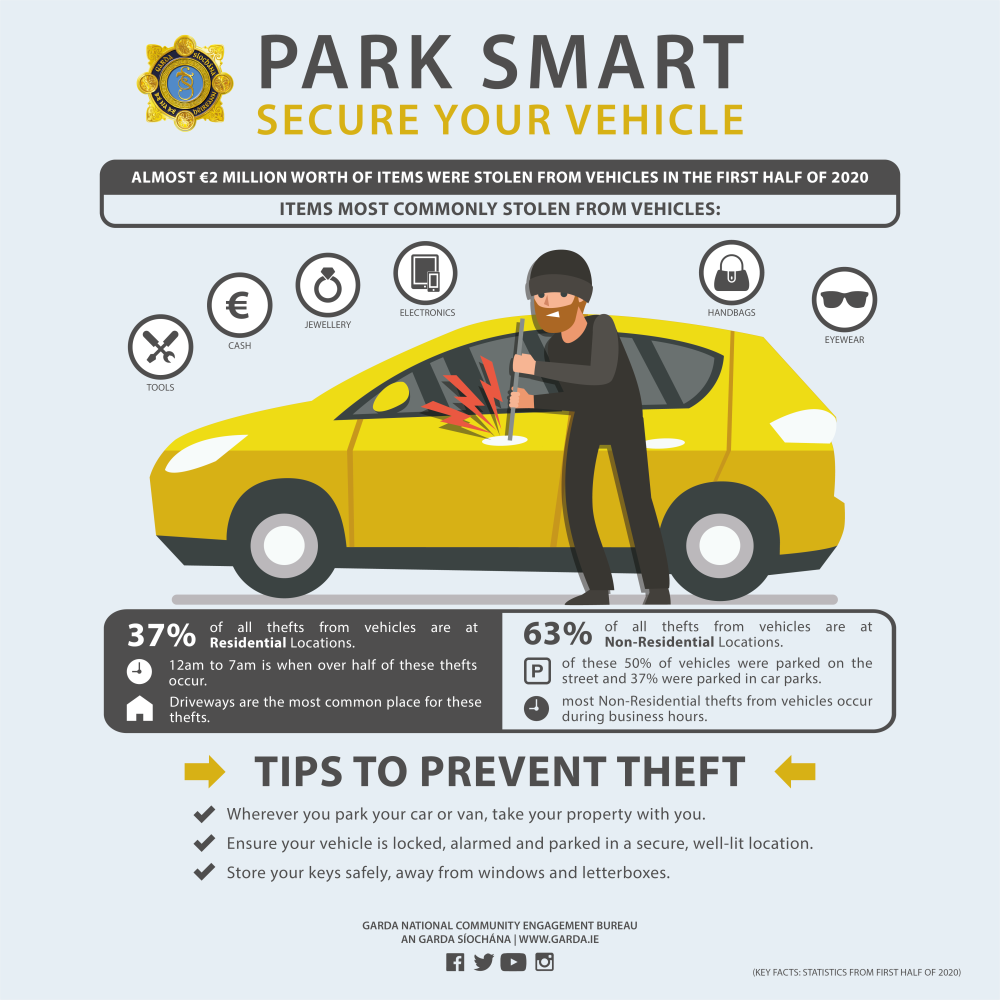
- 38% of all vehicles broken into were left unlocked
- Driveway is a common location for these thefts
- Over 50% of these thefts occur overnight (midnight to 7am)
Tips to Prevent Theft
- Whether you park your car or van, take your property with you
- Ensure your car is locked, alarmed and parked in a safe location
- Store your keys safely, away from windows and letterboxes
An Garda Síochána is appealing to motorists to park smart as new figures show that one-third of all vehicles broken into in residential areas had been left unlocked by the owner.
Figures from the Garda Analysis Service released today show that 8,571 vehicles parked at residential locations were broken into between 2015 and 2017. Of those, 2,824 were reported to be unlocked.
The analysis also shows that the most common location for these thefts was in driveways, and that half of the thefts occurred between 12midnight and 7am. Such thefts are happening throughout the country.
On average, over €340,000 worth of property was stolen from vehicles each year. Property stolen included cash, laptops, tools, sunglasses, jewellery and sports equipment.
Gardaí are appealing for all vehicle owners to ensure they lock their vehicle no matter where it is parked. Do not store valuables in the car, but if you do have to, keep them out of sight.
Sgt Kelvin Courtney from the Garda Crime Prevention National Centre of Excellence said, "Wherever you park your car or van, we would always advise you to take your property with you and ensure the vehicle is locked, alarmed and parked in a secure, well-lit location.
"Many of these thefts, particularly at residential locations, are avoidable with an average of 33% of vehicles being left unlocked in the last three years. Unfortunately, this poor practice has risen as 38% of vehicles were unlocked when they had property stolen from them in January 2018. We’ve even seen cases where two vehicles from the same household were unlocked and broken into.
"Sometimes it is impractical to remove tools and equipment from vehicles. In these cases, owners should take extra steps to ensure the safety of their property. Additional locking mechanisms to vehicles should be fitted. Consider a monitored vehicle alarm and tracking devices for valuable property. Reduce the payoff to the thief by marking and photographing the property and take a record of serial numbers, makes and models. Download the household property register for free from the Garda Website for your records.”
According to the Garda Stolen Motor Vehicle Investigation Unit, the vast majority of cars illegally entered or stolen from are done so using the vehicle’s key. The vast majority of vehicles stolen continue to be taken with keys obtained in burglaries.
An Garda Síochána’s advice surrounding any vehicle keys would always be to avoid leaving them on the hall table or near a door/window where they could be easily taken.
The regional breakdown of thefts from unlocked vehicles between 2015 and 2017 is:
- Dublin: 1245
- Eastern: 532
- Southern: 411
- Western: 261
- Northern: 234
- South Eastern: 141
We also wish to make the public aware of the fact that persons who collect cash from financial institutions/banks/ credit unions/ post offices leave the cash in their vehicles and leave the vehicle unattended as they deal with other business.
Below are some examples of cash stolen from vehicles in recent times:
January 2018- Clondalkin Area- €1000 taken from unattended car
February 2018-Galway area-€5000 taken from unattended car
March 2018 – Limerick area-€300 taken from unattended car
• Avoid using cash if possible
• Conceal all cash when entering and exiting the bank/post offices/credit unions
• Do not leave cash in unattended vehicles
• Be aware of your own personal security, and report anything suspicious to the Gardaí as soon as possible