INTRODUCTION
I want to start by thanking you for the invitation to attend and speak at Conference here today. I very much enjoyed my first conference as Commissioner last year and welcome the opportunity to, once again, meet people from right around the country face to face and hear what they have to say.
I don’t believe any person in this room is under any illusion about the difficult and challenging times within which the country, the public sector generally and An Garda Síochána finds itself at the moment.
We must of course meet those challenges. However it is important that we don’t just focus on the negative and lose sight of the positive developments and successes which continue within our proud organisation.
I therefore want to begin today with a simple but important sentiment and say to each and every one of you: Go raibh maith agat.
On my own behalf and on behalf of my senior management team I want to thank you all and your families for your hard work, dedication and commitment to An Garda Síochána and the communities we serve.
You are the leaders and managers on the frontline and it is under your direction and guidance that we can ensure a professional service is delivered in response to community needs.
I would also like to take a moment to remember the two members of the association who passed away in the last twelve months: Sgt Michael Haran of Ennis Garda Station who passed away after an illness on 27 June 2011 and more recently Sergeant Fergal McHugh, who died tragically on 19 March. I want to extend my sympathies to their wives, children, extended families, friends and colleagues. Ar dheis Dé go raibh a n-anamacha.
YEAR OVERVIEW
I am struck by the fact that when I addressed you last year we were preparing for the imminent arrival to our shores of two very high profile visitors – Queen Elizabeth II and President Barack Obama.
We can all be proud of the role played by An Garda Síochána in ensuring that those State visits were both safe and enjoyable for all concerned. It was an important moment for our country as the eyes of the world looked on and the men and women of An Garda Síochána, under your direct stewardship, implemented an unprecedented and effective security and policing operation.
I want to acknowledge the work of each and every member, whether they were directly involved in the policing and security of the visits and events or ensured that other policing activity continued right around the country.
In the days and weeks following the visits we were inundated with calls, emails and messages from members of the public paying tribute to the professionalism and dedication of the gardaí they met on our streets and on our roads. That work was also acknowledged by the Taoiseach when he presented the organisation with a Public Service Excellence Award for its contribution to the success of the visit.
As I said at the time, and I repeat again directly to you, I was proud of the job you all did in ensuring that both our visitors and our country were safe and secure. Your commitment, resilience and hard work over this lengthy and complex operation were greatly appreciated.
The last twelve months were marked by other successes in our daily business of protecting and securing the community.
Targeted operations resulted in decreases across most areas of serious crime. Focused investigations resulted in arrests and charges in a number of high profile cases, including the area of organised criminality. Continued emphasis on roads policing and enforcement has reduced deaths and injuries on our roads. In every district around the country local gardaí have maintained high levels of engagement and interaction with communities.
Dedicated members are working steadily and professionally on a daily basis across a range of difficult and challenging areas in order to protect the community we serve. These include the ongoing monitoring of dissident activity and organised crime, the investigation of domestic violence and sexual offences, the management of sex offenders, and the progression of a number of highly complex financial investigations.
On the latter, the Garda Bureau of Fraud Investigation works closely with the Office of the Director of Corporate Enforcement and it has also taken the step of involving the DPP’s Office and counsel at an early stage of its investigation.
I commend you and the members whom you supervise and manage for all of this work and the results which flow from it now and into the future.
CHALLENGES
In communications prior to the conference, your Executive raised a number of questions with me and I said that I would endeavour to cover them in my address.
I want to begin by turning to the challenges we face as an organisation – let me again stress my commitment to partnership as the most effective means of achieving meaningful dialogue and doing business and making progress both internally and externally. I am personally always prepared to listen to and work with the central executive.
On an ongoing basis, Assistant Commissioner Human Resource Management represents me, as delegates will be aware, in the fixed and settled structure that exists for discussions, but if a particular issue arises that cannot be resolved, I am happy to meet.
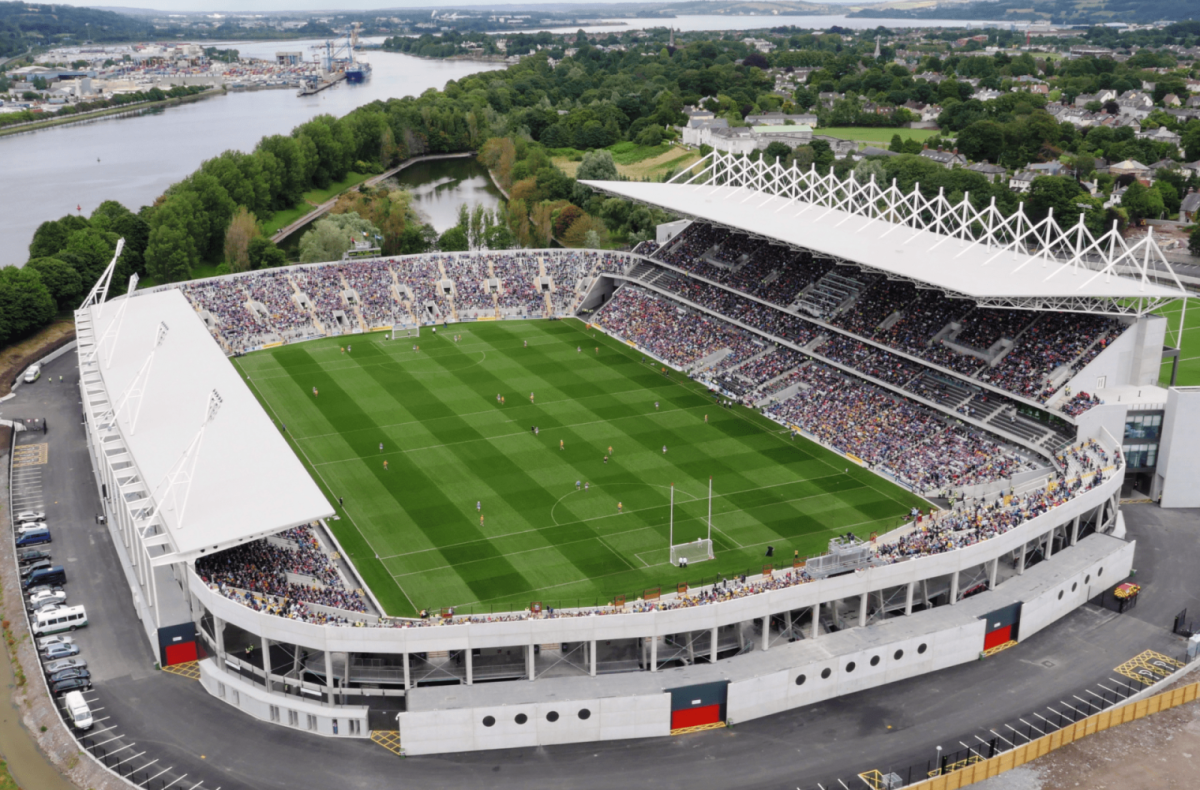
I want to acknowledge publicly once more the level of support for the Public Service Agreement 2010-2014 (or as it is more commonly known, the Croke Park agreement) demonstrated by this Association.
The Croke Park agreement is part of the process of adapting to change and providing resilience. All of the Garda Staff Associations have representatives on each of the working groups covering all areas of this agreement. I would like to place on record my appreciation for your hard work and dedication.
As you will all appreciate, the rapid deterioration in the public finances in recent years requires that more is done with less. The community and our other stakeholders expect more efficiency and productivity. The Annual Garda Policing Plan 2012 promotes efficiencies in resource allocation and deployment so as to enhance the policing service to the community.
There have been important developments in the way we approach our business as a result of the Transformation Agenda and significant progress has already been made under a number of headings. The primary goal is not just to make significant savings but also to bring about improvements in the delivery of services from An Garda Síochána to its customers.
The Action Plan drafted in accordance with the Transformation Agenda provides a vision of how service delivery will be implemented and gives both management and staff certainty and confidence as they face future challenges.
The Transformation Agenda will ensure that An Garda Síochána is equipped and capable of meeting those challenges.
The Croke Park Agreement was implemented in part to protect pay and conditions and aimed to ward off further pay cuts by implementing cost saving measures and as a mechanism for efficiency.
ROSTERS
One of the projects developed under the Public Service Agreement 2010-2014 is that of a new roster for An Garda Síochána.
The scope of the agreement as it refers to any such roster is as follows:
‘[AGS] Will constructively engage for the purposes of developing in 2010, to be piloted and implemented as soon as possible thereafter, a more effective Garda rostering system to more closely match the availability of staff with policing demands, while protecting the welfare of members’.
This is a most important work stream and the new roster which will shortly be introduced within An Garda Síochána will represent the first roster change in 40 years. The new arrangements follow long and intensive consultation and discussions with the Staff Associations and are necessary to ensure we comply with the European Working Time Directive. An equally important focus is the requirement to ensure that any new roster strikes a balance between home life and the need to provide an effective policing service when it is needed most.
I am grateful to the Association and its members for the engagement to date with the discussions and arrangements for the new roster and, more importantly, for their continued support and leadership in its rollout and implementation.
PERFORMANCE MANAGEMENT
The Croke Park Agreement also included an objective focusing on performance management. This has resulted in the introduction of PALF – Performance, accountability and learning framework. A pilot scheme has commenced in three areas selected to represent urban, rural and specialised areas. Training is ongoing and will be evaluated at the end of the year.
The new Performance and Learning Framework system will strengthen and complement existing systems by providing a formal framework for all members to set and achieve goals, discuss performance and development needs and receive appropriate developmental opportunities.
The important word is “learning”. As well as delivering practical gains for the organisation and enabling us to provide a better service to the community, the framework also facilitates identification of development needs and opportunities for individuals so that we can continuously develop Garda personnel at both individual and team levels.
Progress to date is satisfactory and I also wish to acknowledge the tremendous work carried out by your Associations in this area.
MANAGING RESOURCES
It is now and will continue to be the responsibility of local management to determine the best use of resources at divisional and district level. We know those resources are decreasing, as they are elsewhere in the public service, and we have therefore seen a remodelling of districts and divisions, including station closures.
I do not underestimate the effect of these decisions but An Garda Síochána must continue to find efficiencies while still working to provide a professional service. Our commitment is to maintain operational effectiveness and resilience but, in order to do that, work must be prioritised and some hard decisions must be made. This presents a challenge for us all in terms of managing public expectations and explaining that while a policing service may not always be provided in the same way as it was in the past, it is no less effective and our commitment to the community is not diminished.
I note, Mr. President, your remarks about accommodation. The situation regarding the State’s finances has meant that the capital funding in the OPW Vote for the provision of new and improved accommodation for all its clients, including An Garda Síochána, has been substantially reduced in recent years.
Despite the reduced provision, Conference delegates will be aware of the positive developments that have taken place over the last year with the completion of two fine new Stations at Ballincollig and Castleisland. In addition refurbishments have been completed at a number of Stations including Mountjoy, Clonark, Castledermot, Ballybofey, Ronanstown, Kilmainham and Carrick-on-Shannon. New accommodation has been provided for our Change Management Unit at AshtownGate and additional refurbished accommodation has been provided at Thurles for our Central Vetting Unit.
Accommodation projects are currently underway at Coolock and Roscommon and further works, which are subject to the provision of OPW funding, are planned in the coming year at a number of stations including Swinford, Dundrum, Kilkenny, Blarney and Glanmire.
At our request, the OPW is also undertaking a programme to upgrade our cell accommodation.
My aim is to ensure that our accommodation is safe, secure and fit for operational purposes to facilitate the ongoing delivery of the highest standards of professional policing to the citizens of our country. For my own part I wish to assure you all that I will continue to exhort the OPW to improve the accommodation provided to our members on an ongoing basis.
PROMOTIONS/TRANSFERS/APPOINTMENTS
I am aware of the impact of large numbers of retirements at all ranks in recent times. I know I am not alone in regretting that people had to make that choice to retire early, particularly those in leadership and management positions. Nonetheless I am satisfied that we have a reservoir of talent and sufficient skills within the organisation to step up to those jobs.
While the moratorium on promotions and recruitment remains in place, I did secure derogations during the year at both Sergeant and Inspector ranks which resulted in a number of promotions.
At this time, two competitions have commenced: one for promotion to the rank of Sergeant and the other to the rank of Inspector. When these competitions are complete it will be necessary to review our resources and ensure that there is sufficient supervision to frontline services.
Between 1 April 2011 and 1 April 2012, there were 32 movements at the rank of Inspector and 188 movements at the ranks of Sergeant.
Assistant Commissioner HRM met with your Association’s transfer subcommittee on a number of occasions in 2011 and 2012 where transfer issues relative to Sergeant and Inspector ranks are discussed, taking into account applications from individual members or those cases with a welfare background.
The Garda Síochána Code of Practice for Internal Appointments and Promotions has been revised and replaced by the recently published Guidelines which provide that all internal Garda Síochána competitions will now be coordinated through the Competitions Office at Human Resource Management.
GARDA SÍOCHÁNA OMBUDSMAN COMMISSION
Mr. President, I note your remarks about the Garda Síochána Ombudsman Commission and impact you believe that some media coverage of investigations may have on your members. However, we must be conscious that it is statutorily independent and we cannot engage in a public exchange about investigations being conducted by GSOC. I recently met with the new Commissioners and we are engaged in high level discussions with a view to expediting investigations to enable members to have certainty and outcomes at an earlier stage.
IN CONCLUSION, it is important that An Garda Síochána maintains strong links with and a strong commitment to the community.
As Commissioner I want to assure you that I also maintain a strong commitment to you, the men and women of An Garda Síochána who serve that community every day.
No one underestimates the challenges you face in today’s policing environment.
Neither however do I underestimate the levels of professionalism and dedication that you and members you supervise demonstrate on a daily basis.
Once again I thank you for that.
I wish you well for the rest of your conference.
And I urge you to stay safe over the next twelve months until we gather again in this forum. Enjoy the rest of the conference.